Thursday, October 04, 2007


Episode 2.


- Recognize that this place is inextricably tied and linked to the creation of the modern Nation State of Israel, and therefore is testimony to the phenomenon/event of the creation of the modern State as well as placing historical perspective and context to her present identity.


Photo: The valley landscape of Lifta.


Lifta is unique and offers an unrivalled insight into the history of this region. Whilst many palestinian places affected by the Nakba tragedy were either totally removed or annexed under the State of Israel, Lifta stood obscurely due to nearly 60 years of unhinderance from redevelopment. She is a place that conceals the traces of a dramatic scene, of an historical phenomenom preserved and made tangible through memory; a space yet to encounter. She has remained predominantly desolate since the uprooting of her population; no conquest has fully re-contextualized the place. A place located disparate between two epochs, two histories, and the two dominant cultures of the region; a space in-between and connecting two paradigms. Through the phenomena of this relationship she reveals that the dissonance and conflict that arose in the uprooting of her village is inextricably tied together to the creation of the Modern State of Israel.

Lifta is a unique and real trace of a contextual origin of the Modern State of Israel. She is a place where the Modern State can be traced back to an historical event. And regarding genealogical origins, Lifta can also be perceived as important to substantiating the contextual origins of the identity of Israel. She is a contextual origin whereby the genealogy of Israel's history can be traced back to a point of departure; or in this particular case a phenomena made tangible through a bond. The events that occured during the uprooting of the Palestinian and the establishment of the Israeli are inextricably tied together by a context which needs reason behind one historical event to explain the other. Lifta is a place that encounters the creation of the two dominant existential identities of the region; a 'point of departure' of the two current narratives of the Israeli and the Palestinian. The language of history of the Palestinian and the Israeli are bound and concealed by a place; to fail to recognize Lifta is to also to deny both Palestinian and Israeli history.

The two existential narratives opposed in conflict share the same story with the same language of a reality through the given context of Lifta; what the narratives oppose of one another is also brought together by this place. Lifta is a genealogical origin, a place where the language of the conflict is created and departed into two distinctly seperate existential narratives. Their constructions are achieved through dissonance, a staging of a conflict of values, constructing differences and establishing the 'other'. She is a tangible embodiment and representation of the larger context of events in the region during 1947/48, the larger dissonance and the conflict of values. This conflict that defines this particular moment in history has essentially unfolded into the current existential values of today. The current issues of dissonance between the Israeli Jew and Palestinians seen unfolding in the present context have their origins traced at a place whereby the source of the conflict becomes tangible.

Lifta is a place that can allow and sustain a greater insight into the current conflict. As an origin to the modern State, she can be a vital place for contemplating and understanding historical continuity. For instance, the central character of dissonance staged within this region today has the possibility of being objectively engaged and disclosed at this origin. Reflection from a place that conceals the cause increases the likelihood to address further understanding. For Israel's region, Lifta is a place needing enquiry for the purposes of practising self reflection and reappraisal. She is important to situating, establishing and addressing disregarded aspects of the identity of the Modern State. Evidence of the events of 1948 are not only crucial for establishing the preservation of a memory in rememberance to the tragedy, but can connect these historical events to discordant elements inherent within the current nature of planning.


Buildings that still exist today - 2007
Buildings destroyed in the event of the 1948 conflict
The event of the attack by IZL/Stern gangs conquering Lifta's valley
Direction of villagers fleeing in process of uprooting

Map: 'The 1948 conflict in Lifta; the creation of dissonance and the two narratives. (*The information documented in the mapping is an impression of the phenomena/event that occured in the village during the 1948 conflict.)


Due to the ideological outlook of space and a vision subsequently reappraising regional identities, Lifta was uprooted as part of ongoing strategy for a modern Nation-State of Israel. The conflict created during the uprooting of the village, along with the many hundreds of village and towns in the region, underlined the consequence of a radical practice of space and the process of planning. This discord created from this conflict also characterizes particular phenomenons of exclusive constructions in the current nature of planning. (For an example of a detailed analysis into this observation, please refer to the article in the sidelink - 'Reinventing Lifta'.) With this original 'point-of-departure', the modern Nation State of Israel has a genealogical power origin that recognizes a traceable character of exclusivity within the current identity of the State. It explains today why parts of Israel's identity can be percieved as an ever-present reproduction of a conflict of 1948, and thus a history sustained through an exclusive existential narrative.

Alive and in practice through reconstructions the current struggles in the region can be perceived an uncontested phenomena of the original departure and a character also visible within the current nature of planning. If the Nation State allowed the removal of the signs of a unique history, that is still tangible, it would be detrimental in erazing a history which forms part of their current existential truth. Lifta is a unique memorial of facts-on-the-ground that sustains a truth which is significantly crucial to relating and defining the construction of identities. Profoundly, she substantiates Israel's authenticity through the exclusive existential character of her history. Lifta is historically important to the legacy of the State of Israel as well as archaeological evidence of the origin of the modern Nation State. The consequences of the situation of today can be understood by a place that locates exclusivity to a context. An historical point of origin that has the capacity to engage as a common ground at the tangible constructions of confrontation, differences and narratives.

If the past can be understood, drawn upon and engaged at by either side in the conflict, then it can allow greater insight and understanding of the present. Notwithstanding acknowledgement and understanding of the 'other', of how they have become determined and also the situation of being determined in terms of one another. Lifta allows the State to have a space to contest, understand, and respond to the origins of the conflict. It would also be a significant step if truths appearing as confrontational are tolerated through the recognition and preservation of this unique context of place. If cultivations on an historical ground can be recognised as still retaining a form of tangible existence, then here lies an opportunity for the possibility of reconciling differences. Opportunities such as reconciling histories may also allow the possibilty to re-narrate sustainable cultivations; it will also allow Lifta to exist as heritage of the modern State and the region.

For the modern Nation State of Israel to deny the existence of Lifta is also to disregard part of their own history, and of what gets overlooked obliviously and unattended within their own reproductive identity. To recognize Lifta is to also understand a particular characteristic of the Nation State's cultivation, ontological practice of space and how it has an affect on the present. Notwithstanding, identities are distinguished out of their particular differences in cultivation; commongrounds between identities are not conceivable unless they seek to create opportunities from the definable differences. Concerning Lifta and in pursuit to sustain a genealogy this is an important analogy to make, because the common past can be used to resort to reconcilable narratives and situations. Fundamentally, heritage can provide new insight by elaborating history and determine opportunites in the nature of how we locate inclusively or exclusively.

written by Anil Korotane, Architectural Activist, FAST.

For an insight into the tragedy of 1948 from the memory of an uprooted descendant of Lifta, refer to 'Reactions & Memories' side link and scroll down to 'Hussien from Lifta By Mike Odetalla'.

For the Introduction into the Grassroots Campaign & Episode 1, please scroll down below.

Monday, September 17, 2007


(The iconography in this image by a native american indian artist symbolizes a grassroots struggle and solidarity - Also later shown to me, the image seemed very fitting to a poignant poem by Mourid Barghouti - Extracts from Midnight - is featured below the following introduction.)


Setting the challenge for a Grassroots Manifesto and Activism Campaign

Introduction
by Anil Korotane,
Architectural Activist, FAST.

So far in the campaign, we have raised issues such as challenging existing notions on the discourse of Cultural Properties, and questioned the practices on existing international mechanisms and conventions that ultimately aim to protect cultural heritage. We have learnt that international conventions may not suffice as palpable instruments or safety nets for providing the protection of cultural heritages within Nation States. Ultimately Nation States can reside to selecting history and cultural heritages in favour of main-stream ideological agendas. Notwithstanding, that this can influence negative consequences such as the neglection of cultural heritages amongst the marginalised and segregated communities. Nonetheless, in our quest to further understand and challenge discourse on cultural heritage, we have also encountered a greater tenacity amongst the professional planning community in generating new agendas to unfold reconstruction and rehabilitation projects.

FAST's aim is to offer substantial projects guided by conceivable agendas with alternative planning solutions. We are in the process of advocating a grassroots strategy within Lifta's regional context using the wider Israeli and arab Israeli network. To sustain an achievable goal the campaign will adopt a strategy that will contest existing cultural notions; such as the traditional cultural assumptions in the selection of heritage against the more purposeful opportunities arising from heritage diversity. Nonetheless, any agenda for alternative discourse will be in context to preventing the neglection of heritage created in the Redevelopment Plan. To substantiate an agenda will require a reappraisal of this situation concerning the current conflict of interest between the different needs and values regarding Lifta. Any strategy will therefore be dependant upon attitudes, either existing or supported as intervention, that will be vital towards supporting a solution.

For example, this campaign may be perceived as controversial, not coinciding with the current outlook and interests of the authority overseeing Lifta's land and the Nation State. By acknowledging that the character premise of the Israeli Nation State is undoubtly embodied by its own set of exclusive values and cultural traditions, any reality construction may have to reflect upon this on the premise that it is a rule of engagement. It will be necessary in our objective to engage and challenge existing cultural notions with ideas that have the capacity of penetrating traditional attitudes with alternative breadth of view. Lifta represents an identity, and an identity in context to a reality can be perceived and defined as a series and a set of power relationships. With the agenda to protect the place Lifta, any underlining cause should seek to reappraise this identity amongst the traditional conceptions, constructions of rival symbolism and outlooks of place.

FAST's reappraisal is to contend with the cultural workings of identity with a strategy approaching place with the intent to recultivate through gaining regional and national recognition. The real challenge will be to create an informed strategy that can stipulate within the real context of obstacles that are present not only in mind but also on facts created on the ground. For instance, the ethnocentric prejudices and segregation in civil society and the constant barrage of scepticism and antagonism of the 'other'. The grass-roots strategy will aim to counteract such obstacles by reconstructing Lifta's heritage. For instance, FAST will emphasize the value of the relationship between memory and the tangible cultural heritage so that the landscape can convey historical truths capable of empowering Lifta's identity. The workings of the specific use of heritage can have the effect to demystify, reconcile or suggest alternatively to dominant truths present in the conflict.

So the most invaluable resource for an informed strategy will involve relationships to truthful values of Lifta's cultural heritage. Inevitably, the pursuit to justify Lifta's right to exist will also form to define her as a proponent for capacity building in the region. Architectural writings shall be used to create discourse to be used as a vehicle to guide the exploration. The methods proposed will use a clearly defined set of principles and values to create the tools for regional activism. FAST believes that their undertaking will sustain the most integral and credible opportunity of generating a reappraisal to Lifta's situation.

The emphasis of the strategy for regional activism will be based upon the following sets of principles and values:

(i.) Recognize that Lifta has an existing cultivated bond, and that this bond (warrants legitimate recognition) evokes an identity and a relationship to identities.

(ii.) Recognize that this place is inextricably tied and linked to the creation of the modern Nation State of Israel, and therefore is testimony to the phenomenom/event of the creation of the Modern State as well as placing historical perspective and context to her present identity.

(iii.) Recognize that this place contains a unique example of a tangible cultural heritage that evokes a legacy of a place which had a healthy civil equality and no ethnocentric division or segregation.

(iv.)Recognize that Lifta, a place which has an inextricable relationship to the identity of a people and also of a Nation, should have her cultural heritage reappraised so that she can sustain an 'attainable value' for the evaluation of healthy civil progress for the future of this region.


Appraisals of these principles and values will be made clear in individual episodes - beginning with the first episode below and then followed consecutively each week. After the final episode the tools devised for action will be highlighted, thus unfolding the manifesto and taking the next step into the journey of the grassroots activism.


Episode 1.

- Recognize that this place, Lifta, has an existing cultivated bond, and that this bond (warrants legitimate recognition) evokes an identity and a relationship to identities.

Our purpose, first and foremost, is to safeguard the harmony that currently exists between the vivid memories and the architectural antiquities on the landscape. To safeguard a nature of recognition and a sense of belonging. By saving Lifta, we mean to imply that we are trying to protect a place that still exists in the form of a bond. 'Memory' in respect to Lifta is the essence of the place, it is bare without people telling their stories and affirming their union to the place. So sustaining this truthful value is to imply that Lifta is an identity in the shape of a duality. Recognition of this bond existing will mean to recognize a cultivation, which in turn also means to recognize history and a place consisting of a tangible reality.

Considering that an identity in context to a reality can be related to a series and a set of power relationships, Lifta's tangible reality has relationships to other identities either in the form of continuity or of spatial consequence. These relationships are either distinctively within memories - stories - mythologies or through the forms of territory and spatial governance. Authenticating any of Lifta's history would also be laying down the foundations for justifiable cultivations. With the relationship of Lifta, a place with a history prior to 1948 and sited within a territory of the governing power of Israel, Lifta sits inside a surrounding context identifiable by another historical narrative. For the two identities to sustain a shared value - an identifiable relationship, there has to be reason and a value.

Nonetheless, acknowledging that any engagement will initially reflect upon a history of conflict, divisions and segregations between the two identities. And given the differences of outlooks of the main ethnic groups and national identities defined by this history, this should be presumed first as a given situation of the region's reality. However even under these situations Lifta, a place identifiable to a Palestinian origin, still has the capacity to construct a narrative that can allow her identity to be recognised within her regional frontier of the Israeli Nation State. Lifta may be a modern-day ruin, but more importantly she is a monument of the present. She has a unique quality, sustained by her current condition, that can inspire a capacity building opportunity with genuine civic purpose. Again, this is on the assumption of acknowledging that differences, which are currently viewed and designated in the identity of Lifta, can be tolerated for the purposes of contesting and creating curative outlooks between identities and place.

Lifta is tangibly connected to a generation of people who still regard the place to be their ancestral home; if not their home. This same essence and feeling of ancestral origin and home has passed down the next generation and is still strongly felt amongst them. Tragically, Lifta's inhabitants were forcibly abandoned from the place in 1948 during the catastrophic mass exile of Palestinian people known as the Nakba or "catastrophe". A sequence of events synthesized with the establishment of the State of Israel. It refers to the tragedy when hundreds of thousands of Palestinians were uprooted and most of their villages and cities - over 530 - were destroyed. Whilst many palestinian places affected by the tragedy were either totally removed or annexed under the State of Israel, Lifta stood obscurely due to nearly 60 years of unhinderance from redevelopment. The uniqueness of Lifta is due to the phenomenom that no conquest has physically re-contextualized the place.

This valley landscape torn between Lifta and the proposal of Mei Neptoach lies frozen between two epochs, two histories, two cultures. She is a bond and a sense of belonging amongst 3 generations of people. Her unique circumstance, created out of these consequences, has led her to become a space of captivation, necessity and privalege. At regular periods tours are taken around the grounds of Lifta by Zochrot. Zochrot was founded in March 2002 to promote recognition of the Palestinian Nakba to the State of Israel, its residents and institutions. Yacoub Odeh, a 1st generation descendant of Lifta usually accompanies Zochrot and gives guides to both Palestinians and Israelis on his personal accounts of memories in Lifta. Yacoub is very fond cherishing his childhood memories as he accompanies the tour around his father's old house which is still standing. However, his delight is usually followed by trauma, the trauma of a memory which clearly stays with him always; the Nakba.

Lifta's unique situation has allowed her to be utilized as a memorial in consequence to the tragedy of the nakba. Lifta attracts many people who see her as a place where they can console their grief. Where her desolate state conceals a place which appeals amongst those who want to openly reflect upon an event and a history. She is preserved as a place that has not only tangible significance to the bonds of her descendants, but also amongst the shared value of a people who can relate to an open space that conceals signs of their tragedy and reveals the trauma of their fate. The regular trips by Zochrot and Yacoub Odeh have already demonstrating that Lifta has significant value. They are certain that preservation of a respectful, dignified, and sensitive consideration of this tragedy is a necessary stepping-stone on the path to resolving the conflict between the two peoples and achieving reconciliation between them.

The importance of keeping alive this memory, preserving and sustaining this bond and shared value is that it allows the moment of tragedy to become tangible. To be able to express this mourning from a place which symbolizes and recreates the moments of a tragic event allows confronting and exploring issues of dissonance and trauma to become a real experience. This makes recognition of Lifta an affirmation of a previous discontinuity, of an uprooting of Palestinian memory, of history, and of cultivated identity to a land. Any recognition of this bond has to engage that the story of the Nakba is being told whilst inside a surrounding context juridiscially governed and owned to another historical narrative. Allowing this duality to have legitimate recognition would therefore require some form of mediation and renegotiation on behalf of a narrative that can allow Lifta and the surrounding context to coexist.

However, this would require a narrative that openly accepts truths that occurred during the Palestinian Catastrophe Nakba and the Independence of Israel. 'Memory' begins to take on a whole new meaning as it would have to take into account the narrative of the birth of the modern Israeli State. There is quite a distinct seperation that places meaning on the land between the narrative of Israel and the narrative of the palestinian. Lifta's value can be distinctly characterised as contrasting and incompatible with the historical narrative of the Israeli State. Her ontology can quite easily be perceived as an act of subversion; a conflict of interest and values further provoking discord and confrontation in an act of becoming recognised. Situating the Nakba into a revised historical narrative of the surrounding context is more than likely to create tension and controversy and can quite easily be perceived as an historical conflict and problem.

So how does it become possible to resolve this crisis of values, designating Lifta for curative purposes for the Nakba is bound to any real conceivable reason and sense to justify her existence. Lifta may be perceived as a proponent for Palestinian existentialism, nonetheless she needs her history to be told within the narrative of the region that she belongs. Recognition of Lifta's ruins as a memory, a monument, a bond, and a possible cultural foundation existing within Israel adds extra possibilities for the nation. Lifta has the potential to become the untold story of a nation, epitomizing a common history shared between two disparate cultural groups. She confronts conquest and despair; tying together two opposing value systems. This would mean any real pursuit to safeguard the protection of Lifta would also require a strategy that further creates an enquiry that moneuvres and mediates between a tapestry of recognising histories.

written by Anil Korotane, Architectural Activist, FAST.
----------------------------------------------------------------------------------


Extracts from Midnight
by Mourid Barghouti

Translated by Radwa Ashour

My grandfather, still harbouring the illusion
that all is well with the world,
fills his countryside pipe
for the last time
before the advent of the helmets and bulldozers.

On the bulldozer's teeth
my grandfather's cloak gets hooked.

The bulldozer retreats a few yards,
empties its load,
comes back to fill its huge fork
and has never had enough.

Twenty times, the bulldozer
comes and goes,
my grandfather's cloak still hooked on it.

After the dust and smoke
had cleared from the house that had been standing there
and as I was staring at the new emptiness
I saw my grandfather
wearing his cloak,

wearing the very same cloak,
not one that was similar
but the very same.

He hugged me and maintained a silent gaze
as if his look
ordained the rubble to become a house,
restored the curtains to the windows,
brought my grandmother back to her armchair,
and retrieved her coloured pills,
put back the sheets on the bed,
the lights on the ceiling,
the pictures on the walls,
as if his look brought the handles back to the doors and the balconies to the stars,
as if it made us resume our dinner,
as if the world had not collapsed,
as if heaven had ears and eyes.

He went on staring at the emptiness.
I said:
What shall we do after the soldiers leave?
What will he do after the soldiers leave?
He slowly clenched his fist
recapturing a boxer's resolve in his right hand,
his coarse bronze hand,
the hand which had tamed the thorny slope,
the hand which holds his hoe lightly
and with ease like prayer,
his hand which can split a tree stump with a single blow,
his hand open for forgiveness,
his hand closed on sweets to surprise his grandchildren,
his hand amputated
years ago.

Thursday, June 28, 2007


Row over Israeli architects deepen
follow up article by Susannah Tarbush, published in the Saudi Gazette June 11 2007.


The world of international architecture is being rocked to its foundations by a fierce row over a campaign which demands Israeli architects end their complicity in creating “facts on the ground” which exclude and oppress Palestinians and wipe out the possibility of a viable future Palestinian state.

The dispute has engulfed some of the leading figures in British and Israeli architecture. In an interview in the latest issue of the British weekly magazine Building Design, Israel’s most prominent architect, Moshe Safdie, accuses British architects of being “hypocritical, self-serving and hateful” for signing a petition organized by the London-based organization Architects and Planners for Justice in Palestine (APJP).

The temperature was raised further when it emerged that a lobbying group British Architect Friends of Israel and the Simon Wiesenthal Center have written jointly to the Paris-based International Union of Architects (UIA) - the worldwide umbrella of 102 national organizations and 1.3 million architects - calling on it to suspend the membership of the Royal Institute of British Architects (RIBA) unless RIBA dissociates itself from the APJP petition. The letter alleges that with its “anti-Israeli focus” the campaign violates EU clauses and definitions on national discrimination and anti-Semitism.

The petition was signed by RIBA’s current president Jack Pringle as well as by former presidents Sir Richard MacCormack, Paul Hyett and George Ferguson, and president-elect Sunand Prasad. Boston-based Safdie lambasted Pringle for signing the petition and suggested he should either have resigned as RIBA president before doing so, or should have sought a decision from the RIBA Council over whether it supported the petition.

The petition, which was published as a half-page advertisement in the Times newspaper of London, was signed by more than 260 architects, planners and others from around the world, among them some of Britain’s most famous architects and a number of Israeli architects and human rights activists. The petition says that the actions of Israeli architects and planners working in conjunction with Israel’s policies building of illegal settlements on Palestinian territory are “unethical and contravene professional codes of conduct and UIA codes.”

The petition argues that it is time to challenge the Israeli Association of United Architects (IAUA) and the Israeli government to end such projects, and says the IAUA should adhere to UIA codes. It calls on the IAUA “to declare their opposition to the inhuman Occupation, and to end the participation of their members and fellow professionals in creating facts on the ground with a demographic intent that excludes and oppresses Palestinians.” APJP has sent copies of the petition with letters to the presidents of the IAUA and the UIA.

The petition has infuriated the Israeli government and its supporters, and readers of Israeli newspaper and TV websites have posted numerous hostile messages, in some cases accusing British architects and the British in general of anti-Semitism. A typical message said that “Israel-bashing” England is on its way to becoming “the first Islamic state in Western Europe”. One reason for the anger aroused by the APJP petition is that it came around the same time as the University and College Union (UCU) voted at its annual meeting to support moves towards an academic boycott of Israel. The boycott issue is now one of the hottest topics in British-Israeli relations, and in the House of Commons Prime Minister Tony Blair called on the UCU to drop the resolution it had adopted. The APJP petition does not specifically call for a boycott, but it is being drawn into the boycott controversy.

Moshe Safdie claims to advocate a two-state solution to the Palestinian conflict and says that “many have objected, as I have, to building in the West Bank. Some have joined groups fighting the construction of the wall, but we are all aware of the complexity of the issues and all of us, collectively, are disappointed and angered by the position of our British colleagues.” Safdie said he was disgusted that British architects, including Will Alsop, Terry Farrell and Richard MacCormac, had singled out Israel when regimes across the world carry out “the most terrible atrocities.”

Jack Pringle robustly rebutted Safdie’s remarks. He told Building Design: “Moshe Safdie is a brilliant architect but it’s not for him to make policy for the RIBA, myself individually or as president.” Pringle “totally accepts” that there are oppressive regimes all over the world, “but to say you can’t criticize one without criticizing them all is extremely naïve”.

In his blog on the RIBA website, Pringle explained that he and his successor, Sunand Prasad, had signed the petition in their own capacities and not as representatives of RIBA, which is a non-political organization. He added that although he is a staunch supporter of a State of Israel, he signed the petition because “I believe, as a citizen and as an engaged observer, that the Israel/Palestinian issue is the most destabilizing and the most important issue in the Middle East and thus in the world today.” Until a lasting and fair peace is established in the region, there can be no prospect of a stable world peace. “To do this both sides must play by the rules with a measure of respect for each other’s rights. These particular petitions relate to Israel’s actions on territory in contravention of many UN resolutions, with the notable involvement of architects and planners.” Pringle also condemned the “many grave, violent and heinous Palestinian misdemeanors in other spheres of the ongoing war, with its attendant terrorism.”

Pringle rejected any charge of anti-Semitism as “very offensive to me and quite absurd as a glance at the petition with its many Jewish co-signatories will show. Indeed, many Jewish agencies support the petition, and its main promoter is Jewish himself.” (The last reference is to the APJP chairman, the architect Abe Hayeem). He was sorry if any RIBA members were offended by his signing the petition, “but I trust they will understand the balance of my opinion – and my right to express it.”Other signatories to the petition have also publicly defended their stand. The eminent architect, critic and theorist Charles Jencks (pictured below)wrote a letter of protest to Building Design after Michael Peters, who is founder and chairman of the international branding consultancy Identica and has worked extensively with Israeli architects, warned that as a result of the petition “British architects are going to burn their bridges with a number of developers – Israeli, British and European”, Jencks, who has been one of APJP’s most vocal supporters since it was set up in February 2006, described Peters’ warning as being in “the worst tradition of intimidation. Of course, some architects will succumb to such veiled and explicit threats because it sometimes pays to be silent, but the list of signatories – including four RIBA presidents and the next one – shows that, contrary to Peters, many British architects do indeed understand the situation in Israel and that number is growing…One cannot but protest at the destruction of a nation.”

The issuing of the petition coincided with the 40th anniversary of the 1967 war, which has focused world attention on the massive changes that have been wrought by the Israeli occupation of Palestinian territory. As the APJP petition states, acting against international law Israel continues to build illegal settlements on Palestinian territory, with the help of Israeli architects and planners.

The APJP petition highlights “three typical projects that make Israeli architects, planners and design and construction professionals complicit in social, political and economic oppression, in violation of their professional ethics.” One of the projects is in the village of Silwan near Jerusalem, where 88 Palestinian homes are under threat of demolition as part of a development for ultra-religious Israeli settlers from the El-‘Ad group on illegally annexed Palestinian land. The EU has condemned the development. APJP points out that the Ministry of Housing for the Jerusalem District and Jerusalem Municipality appointed Moshe Safdie’s Jerusalem office to prepare a Master Plan for the southern slopes of the Old City which include the Silwan neighbourhood of Al-Bustan where the 88 threatened houses are located.

The second project is for the conversion of the ruins of the Palestinian village of Lifta , also near Jerusalem, into a development for wealthy American visitors with, APJP says, “the exclusion of the original Palestinian inhabitants, their heritage and memory.” APJP is supporting the campaign to save Lifta which is spearheaded by the group the Foundation for Achieving Seamless Territory (FAST).

The third project is the E1 plan to expand the largest illegal Israeli settlement, Ma’ale Adumim, to link it with metropolitan Jerusalem. This will dissect the northern and southern West Bank, destroying the possibility of a contiguous Palestinian state.

The issuing of the petition raises the question of whether architects should involve themselves in political issues. Former RIBA president Paul Hyett wrote in Building Design that politics has a role to play in architecture. He recalled his past as a member of Architects Against Apartheid, when he played a part in the 1972 decision of RIBA to sever links with the South African Institute of Architects.On a 2002 visit to South Africa, when he was RIBA president, Hyett apologized to the South African Institute of Architects for any upset caused by the decision to sever links 30 years earlier. However, “many South African architects told me that severance had been a huge boost to morale. They said it had highlighted international support for their own disgust at their government’s actions.”

Friday, June 15, 2007


FAST exhibited the Lifta project in the EU parliament building in Brussels

FAST Call on the EU Parliament to use their influence in making a change by reintroducing the human scale to abstract plans that violate human rights on base of ideological agendas.
The fate of Israel and the fate of Palestine are bound together. The destruction of the country’s genuine cultural heritage is a threat to future sustainability, not just of Palestine and Israel but also of the region and of the world.

At FAST, we truly believe that a just solution for Lifta will form a vital step in reconciliation process between the nations, between Israel and Palestine.

Thursday, June 14, 2007

Chomsky supports ‘Saving Lifta’ campaign.

(The WMF nomination described in this post has since been rejected - please refer to http://www.wmf.org/ to view nominated sites)

Noam Chomsky along with many leading professionals and academics join the ‘Saving Lifta’ campaign by supporting FAST’s application to nominate Lifta on the 2008 World Monument Watch list of 100 Most Endangered Sites.

Lifta is one of the last places intact and one of the last opportunities to change the conservation policies in Israel. It is also one of the last chances of officially recognizing the Palestinian history as part of the history of the area, a crucial factor for future sustainability. However, there is no governmental acknowledgment to the fact that the approved redevelopment plan for Lifta is insufficient and subsequently prevent its execution. The current practice of the State defining within its territiory control over heritage policies does suggest the problem that not all heritages within the border will be represented. Quoting non-profit Israeli organization Zochrot, ‘Palestinians villages and cities destroyed in 1948 do not enjoy the protection of relevant bodies, for example the protection accorded to natural sites by the Israeli Society for the Protection of Nature or the protection accorded to ancient historical sites by the Antiquities Authority.’ There is no formal recognition that a good preservation plan for Lifta can allow a precious and unique part of Palestinian patrimony to be conserved.

The main obstacles to the realization of effective site protection are likely to be related to changing influences and policies in both the local and international sphere. On the contrary, our previous encounter with UNESCO to nominate Lifta for World Heritage protection was brushed aside with a remark of disillusionment. For an non-governmental organization (FAST) approaching UNESCO to create an application was inconcievable in coordance to the conventions and terms currently in place between the dynamic of the United Nations and the Nation-State. International conventions and instruments are not substantial safety nets if they don't reach out to cultural heritages that are marginalized within predominant ruling cultures. FAST’s attempt was to highlight issues with the World Heritage Committee to examine existing conventions on the protection of volatile cutural heritages that are denied or under-represented any formal recognition. (For further reading on FAST's intention to contact UNESCO, please click on the December blog: 'Crime & Retribution'.) Lifta represents this sector of heritage, and our efforts were to encourage dialogue in support of her protection whilst addressing her as a place worthy of the recognition of outstanding universal value to the international community. Nonetheless, excepting the partiality of the Quartet of powers (the USA, the EU, the UN & Russia) over the 2 State geopolitical solution and Israel’s current unilateral position, the reality at the moment is that this palestinian heritage existing within the territory of Israel is more likely to turn a blind eye than receive a warm welcome. However there is an influential scheme which responds to threats to cultural heritage sites around the world whilst empowering individuals and organizations the capacity to nominate cultural heritage sites without direct authorization through governments.

Announced every two years, the Worlds Monuments Watch list of 100 Most Endangered Sites calls international attention to cultural heritage sites around the world threatened by factors such as neglect, vandalism, armed conflict or natural disaster. The Watch raises awareness of the dangers facing cultural heritage sites and can help to raise public awareness of lesser known, but significant sites that are threatened. Each site selected for the Watch list is included in a special publication and the Watch list receives extensive publicity in the international media. Since the Watch's program inception, 481 sites in 109 countries have been included in the Watch. The List of 100 Most Endangered Sites is a program founded by the World Monuments Funds (WMF). Founded in 1965, the WMF is a private, international nonprofit organization dedicated to the preservation of significant and endangered architectural and cultural heritage sites and pursuing its mission by providing financial support through advocacy, fieldwork, technical assistance, education and onsite training. Unlike national or international designations, the Watch list does not confer permanent historic status or permanent recognition on a site. Instead, by featuring sites every two years, the Watch list seeks to generate public awareness - a sense of urgency - and support the preservation of a wide range of sites at risk. Through the Watch, WMF intends to bring the key problems facing threatened cultural heritage and encourage timely responses for governments, local organizations and the general public.

If Lifta’s nomination is successful, FAST intends to include the nomination in their strategy to devise the drafting of an alternative conservation plan. The alternative plan for Lifta will underline the preservation of the old village as an 'open to public' space. A place where the real history of the village is being told and is accessible to everyone. Also, there is no official recognition to the fact that the participation of the village's former inhabitants and descendents are necessary in underlying Lifta’s fate; it is the very last possibility for Lifta’s inhabitants to maintain a role in the fate of their home town. So planning will accompany an emphasis on tracking down the original community and having their involvement in drafting a conservation plan. There are also local individuals and regional organizations in the field of conservation who are prepared to play a role in a conservation taskforce. However, FAST also fully acknowledges that the viability of any solution towards the drafted conservation plan will ultimately have to seek its acceptance by the Israeli government, as it is the only body that can legally bring to its execution. So a substantial capacity-building conservation plan has to present a proposal which shares an all inclusive appeal.

The nomination to the World Monument Watch can help FAST highlight the plight of Lifta to the wider international audience. The WMF 2008 (to 2010) Endangered Sites nomination’s recognition and accessibility to international media sources and coverage can help place into effect alarm and concern on the current proceedings of the existing redevelopment plan. Gathering advocacy from an internationally respected Cultural Heritage institute such as the WMF can substantiate the real cause of concern in the international community, urging pressure on the Israeli Land Authority and the Jerusalem Municipality Planning Department to reassess the situation of the existing proposal. Both a media campaign and an alternative plan have to coincide to place substantial pressure on the Israeli authorities. We are hoping that the WMF can advocate on the cause by acknowledging that a viable solution has the possibility of being created, and support our efforts for proposing a plan which appeals to the necessary conservation effort. We will also focus efforts to sustain acknowledgement and legal protection for the preservation of Lifta's heritage and freeze any action and progression of the redevelopment plan. It will be important for FAST to determine, through the development of conservation planning instruments, that Lifta can create and meet the criteria to establish herself as heritage worth protecting. We will develop the conservation plan, finalizing the plan in 2009.

The 2008 Endangered List Nomination may be one of only a few possible opportunites of by-passing Israel’s restrictions of what is at present ideologically considered in that region as cultural heritage of outstanding universal value. Volatile cultural heritages such as in the case described for Lifta are in need of recognition so that their histories are neither appropriated or erazed.

To quote Chomsky’s letter of support accompanying Lifta’s 2008 Endangered List nomination:

I have been informed of a proposal to the World Monument Funds to preserve the Palestinian village of Lifta, near Jerusalem, evacuated during the huge dispossession of the population in the 1948 war, one of the rare villages that has not been destroyed. Unless action is taken soon, it too will disappear, absorbed into the expanding suburbs of Greater Jerusalem.

Whatever one’s attitudes and opinions about these grim events and their aftermath, no decent person can fail to recognize the trauma of the hundreds of thousands of people who fled or were expelled during what is by now recognized by leading Israeli historians of very different persuasions as large-scale “ethnic cleansing” (Benny Morris, Ilan Pappe, to mention two). And it is evident to all that the events led to a dramatic transformation of a small region of the world of unique historical importance, from the earliest days of human evolution and through the formation of some of the world’s major civilizations. Very little remains from the pre-war period, its culture, traditions, and historical memories. The survival of Lifta is an unusual exception, a treasure that should not be lost. I hope very much that some way will be found to protect and preserve it.

Noam Chomsky
Institute Professor
MIT
Cambridge MA 02139
Jan. 12, 2007

Wednesday, June 13, 2007


The separation wall near Qalandia checkpoint, between Jerusalem and the West Bank city of Ramallah, 28 December 2006. (Fadi Arouri/MaanImages)


Pressure mounts on Israel's architects

Susannah Tarbush, The Electronic Intifada, 10 June 2007


(FAST - 'This article by Susannah Tarbush extracted from The Electronic Intifada continues on the petitions made to the Israeli Association of United Architects (IAUA) by the Architects and Planners for Justice in Palestine (APJP). The APJP have consulted the professional codes of conduct of the International Union of Architects, the UIA codes, as a plight for a universal ethical code to be upheld by the IAUA. This article elaborates more extensively on this ongoing story occurring in the backdrop of the Lifta campaign.')


Just days before 5 June's 40th anniversary of the start of the June 1967 war, some of the biggest names in British architecture signed a petition calling on Israeli architects and their fellow professionals to stop participating in the creation of "facts on the ground", which obliterate the idea of a viable future Palestinian state.

The petition, organised by London-based Architects and Planners for Justice in Palestine (APJP), condemns "three typical projects that make Israeli architects, planners and design and construction professionals complicit in social, political and economic oppression, in violation of their professional ethics." The three projects are the E1 plan to expand the largest illegal settlement -- Ma'ale Adumim -- to link it with metropolitan Jerusalem, and developments in the village of Silwan and the deserted village of Lifta.

The signatories include Charles Jencks, Will Alsop (Stirling Prize winner in 2000), Ted Cullinan, Rick Mather and Sir Terry Farrell. The president of the Royal Institute of British Architects (RIBA) Jack Pringle is also a signatory as are former presidents Sir Richard MacCormack, Paul Hyett and George Ferguson and president-elect Sunand Prasad.

In all, more than 260 architects, planners, academics and others have signed the petition, from countries including Britain, Israel, Palestine, Australia, the USA, Japan, Cuba, Brazil, Finland and the Netherlands. The petition was published as an advertisement in the London newspaper The Times; the full version can be seen (and signed) on the APJP website at http://www.apjp.org/.

Coincidentally, the issuing of the petition came as the London Independent newspaper reported that Theodor Meron, who was the Israeli Foreign Ministry's legal adviser in 1967, still believes he was right to warn the Israeli government after the 1967 war that it would be illegal to build Jewish settlements in the occupied Palestinian territories. Judge Meron is now one of the world's leading international jurists.

The APJP petition asserts that the actions of Israeli architects and planners working in conjunction with Israel's policy of building illegal settlements on Palestinian territory are "unethical and contravene professional codes of conduct and [International Union of Architects] UIA codes." It says it is time to challenge the [Israeli Association of United Architects] IAUA and for the Israeli government to end such projects, and calls on the IAUA to adhere to UIA codes. APJP calls on the IAUA "to declare their opposition to the inhuman Occupation, and to end the participation of their members and fellow professionals in creating facts on the ground with a demographic intent that excludes and oppresses Palestinians."


The petition has been sent to UIA President Gaetan Siew, IAUA President Anda Barr and to the Israeli Housing Ministry. A copy has also been sent to Prime Minister Ehud Olmert's office.

APJP says this is the first time Israeli architects have been directly challenged in this way. As APJP chairman, the architect Abe Hayeem, put it to SaudiDebate: "The occupation is an architectural enterprise, with the separation wall, settlements and the matrix of control -- bridges, tunnels, checkpoints and complex terminals." The occupation projects are perpetuating apartheid, with all settlements built within a matrix of separation. The terminals -- including the Kalandia terminal -- are elaborate architectural constructions.

Crucially, the petition has been signed by a number of Israeli individuals and organisations, such as the head of Bezalel Academy's architecture department Professor Zvi Efrat, the architect, author and scholar Eyal Weizman, the director of the Israeli Committee Against House Demolitions (ICAHD) Jeff Halper, Zochrot director Eitan Bronstein, director of BIMKOM (Planners for Planning Rights) Shmuel Groag, director of the Foundation for Achieving Seamless Territory (FAST) Malkit Shoshan, graphic designer David Tartakover (winner of the Israeli prize for design in 2002) and professor of geography at Ben Gurion University Oren Yiftahel.

Palestinian signatories include architect Haifa Hammami (the secretary of APJP), architect and professor at Al-Quds University Osama Hamdan, architects Fahmi Salameh and Nadia Habash, and the director of the Ramallah-based NGO RIWAQ -- the Centre for Architectural Conservation, Suad Amiry.

The petition has aroused criticism from Israel's supporters. The chief executive of the Board of Deputies of British Jews, Jon Benjamin, told the Guardian newspaper: "What they are saying is that they have a certain view and that Israeli architects must publicly declare that to be their position as well." Benjamin said that Israeli Arabs and Jews were working together on numerous low profile but worthy projects in the Occupied Territories, and that "the two sides should be encouraged to work together."

When the Guardian article was republished by the Israeli daily the Jerusalem Post and on the Ynetnews website it attracted a host of hostile comments from readers accusing APJP, British architects, and the British in general of anti-Semitism. Many of those posting comments assumed that APJP was calling for a boycott of Israeli architects -- although the petition makes no mention of a boycott -- and drew parallels between the petition and the boycotts of Israel called for by organisations of British academics, doctors and journalists. Jerusalem-based Infolive.tv website said that "anti-Israel and anti-Semitic bias and one-sidedness has often been cited by observers as prevalent in the British media and academic world. " There were also negative reactions in the blogosphere; one blogger compared the British architects to Nazi architect Albert Speer.

"The IUA principle states that architects 'shall respect and help conserve the systems of values and the natural and cultural heritage of the community in which they are creating architecture. They shall strive to improve the environment and the quality of the life and habitat within it in a sustainable manner, being fully mindful of the effect of their work on the widest interests of all those who may reasonably be expected to use or enjoy the product of their work'."An article in the British weekly magazine Building Design quoted Michael Peters, founder and chairman of the international branding consultancy Identica, as warning: "British architects are going to burn their bridges with a number of developers -- Israeli, British and European."

Peters, who has worked extensively with Israeli architects, alleged that British architects do not understand the situation in Israel. "Getting involved in a lobby group can only do a disservice to the whole architectural profession" he said. "To accuse [Israeli] architects of being complicit is nonsense."

But Abe Hayeem told Building Design that his fellow architect supporters were "pretty courageous" and insisted that architects would not be deterred from backing causes they supported. British architect Will Alsop strongly defended the petition, saying it is "not against Israel, it's for Palestine". Alsop said: "I think the Palestinians are living in a prison and they deserve better than that. I'd like fellow colleagues in Israel to feel some responsibility about this shabby treatment. Architects are a fairly humanitarian lot and perhaps they could help."

For architects to be supportive of APJP can potentially have adverse career repercussions, as was dramatically shown by the volte face of one of Britain's most famous architects, Lord Richard Rogers. When APJP was set up in February 2006, its inaugural meeting took place in Lord Rogers' offices in London and Lord Rogers made some introductory remarks.

But within weeks Rogers publicly dissociated himself from the group, dismaying APJP and its sympathisers. His U-turn came after powerful pro-Israeli interests in New York threatened him with the loss of his commission for the $1.7 billion project to expand the Jacob K. Javits Convention Centre in Manhattan because of his links with APJP. The late Senator Javits was an ardent supporter of Israel. Other Richard Rogers Partnership projects in New York were also threatened.

Rogers at first said he was dissociating himself from APJP because of its published aims and "in view of the suggested boycott by some members," although APJP denied it was promoting a boycott. He said he had only hosted the APJP meeting as a favour to Abe Hayeem. Rogers subsequently enlisted the services of legendary New York PR man Howard Rubenstein and hardened his line, coming out with statements defending Israel's right to build its separation wall. He described the Israel-Palestine conflict as being between a "terrorist" state and a "democratic" one and said that he was "all for the democratic state".

Despite this initial setback, APJP has proved effective in mobilising opinion within the architectural profession in Britain and worldwide. As in its latest petition, it strengthens its arguments by focusing on specificities in addition to stating its broad ethos and aims. In Silwan, one of the three projects detailed in the APJP petition, 88 Palestinian homes are under threat of demolition as part of a development for ultra-religious settlers from the El 'Ad movement. Silwan is part of East Jerusalem, whose annexation by Israel after the 1967 war is considered illegal under international law.

The Ministry of Housing for the Jerusalem District and Jerusalem Municipality appointed the Jerusalem office of the Israeli architect Moshe Safdie to prepare a Master Plan for the southern slopes of the Old City. The plan includes the Silwan neighbourhood of Al-Bustan in which the 88 threatened houses are located, near the archaeological site of biblical Siloam.

The planned area -- termed the historical 'City of David' -- is the brainchild of El 'Ad, a fundamentalist settler group which has been buying and expropriating houses in Palestinian neighbourhoods for many years with the tacit approval of the Jerusalem mayoralty. APJP points out that the EU has condemned the development, and that the Silwan plan contravenes the spirit and letter of the Road Map. The Road Map states that Israel should end actions including the confiscation and demolition of Palestinian homes and property as a punitive measure or to facilitate Israeli construction.


APJP is coordinating its call on Silwan with local Israeli and Palestinian architects and NGOs including BIMKOM, ICAHD, FAST, Ir Amim (City of Peoples), ACRI (Association for Civil Rights in Israel), Bat Shalom and ARIJ (Applied Research Institute of Jerusalem).

The second project highlighted in the petition concerns the deserted village of Lifta. The 4,000-year old village lies just outside Jerusalem and its last Palestinian inhabitants were killed or driven out by the Israeli Army and the Irgun in 1948. Today it is more or less a ghost town frozen in time, with its former inhabitants scattered between East Jerusalem, Ramallah, Jordan and the US.

APJP describes the campaign to save Lifta as "a plea against architectural erasure and the destruction of memory. While Israel proudly preserves its biblical heritage and archaeological sites, the rich Palestinian heritage is being allowed to disappear or deliberately destroyed."

A renovation project by architect Gabriel Cartes of the Groug-Cartes firm, in collaboration with Ze'ev Temkin of TIK projects, aims to turn Lifta into an expensive and exclusively Jewish residential area, mainly for Americans. It would have 300 luxury flats, a large hotel, a big mall and a large tourist resort. Hundreds of pre-1948 Palestinian homes would be destroyed to obliterate any reminder that the area was once a prosperous Arab town. APJP says this is "a process amounting to cultural vandalism."

APJP is supporting the Israeli group FAST in the campaign to preserve Lifta. Israeli organisations Zochrot and BIMKOM have also opposed the Lifta Master Plan. APJP's petition asks for Lifta to be retained as a ruin or a memorial as a reminder of its real past or -- preferably -- to be allowed to be re-inhabited by survivors or descendants of the original residents. Either way, survivors and descendants should be consulted. Four generations later the descendants are still protesting for the right to return: the APJP petition has been signed by a number of "Liftawis".

The third project named in the petition is the E1 plan to expand the largest illegal settlement, Ma'ale Adumim, so as to link it with metropolitan Jerusalem. Ma'ale Adumim is the largest settler city, housing 30,000, and "stands out as the key element in Israeli's colonial expansion as far west as possible from Jerusalem towards Jericho." E1 is the hilly area between East Jerusalem and Ma'ale Adumim and Israel is intending to annexe it to make a continuous urban development. Under the project, designed by Shlomo Aharonson, some 5,600 settlement homes for 25,000 new residents will be added to the municipal area of Ma'ale Adumim. In addition, some 1,600 dunums of land are being confiscated to erect Israel's separation wall for Ma'ale Adumim.

APJP says the project contravenes the Road Map and blocks any future possibility of a contiguous Palestinian state by cutting off East Jerusalem from the rest of the West Bank, and cutting off the northern part of the West Bank from the southern part. "This deliberate violation of the road map and the Oslo accord forestalls any basis for negotiating land for peace. When complete, the total area of Ma'ale Adumim and E1 will be 55,000 dunums -- an area larger than Tel Aviv in the heart of what should have been a Palestinian state."

In calling on the IAUA to stick to International Union of Architects (UIA) codes, it particularly has in mind the principle in the UIA charter on obligations to the public. This principle states that "architects have obligations to the public to embrace the spirit and letter of the laws governing their professional affairs, and should thoughtfully consider the social and environmental impact of their professional activities."

The principle states that architects "shall respect and help conserve the systems of values and the natural and cultural heritage of the community in which they are creating architecture. They shall strive to improve the environment and the quality of the life and habitat within it in a sustainable manner, being fully mindful of the effect of their work on the widest interests of all those who may reasonably be expected to use or enjoy the product of their work." IAUA is a member of UIA, as is RIBA, and it is possible that the issue of IAUA members' alleged contraventions of the UIA's charter will be raised at the UIA council.

APJP's activities have inevitably aroused controversy, including its petition last September addressed to the organisers of the 10th International Architecture Biennale in Venice asking them to consider withdrawing the Israeli pavilion. The petition argued that the Israeli pavilion "totally excludes the Palestinians who are the target and real victims of the seemingly unending series of wars being memorialized, and awards Israeli the sole position of victim and victor."

The Israeli pavilion, funded by the Israeli government, consisted of 15 memorials built between 1949 and 2006 to commemorate Israeli military war dead or the Holocaust. The Israeli Defense Ministry provided substantial support.

In an interview during the Biennale the eminent British architect, critic and writer Charles Jencks said the problem with the pavilion was that it had no place for the Palestinians who are "not allowed to commemorate or memorialize anything in their past that has been repressed, such as the 560 villages, towns and cities which have been destroyed and wiped out." Jencks acknowledged that "architects can't be heroes", but asked: "How do we as architects not become complicit with power and a negative national situation? ... I don't believe architects willingly knew they were letting themselves in to be an arm of the Israeli defence department, but that is the way it has come out."

Jencks alluded to the tensions between some Israeli and other architects when he said that he had discussed APJP's objections to the Israeli pavilion with Moshe Safdie, one of Israel's best-known architects, but Safdie had failed to see his point of view. "Moshe Safdie says he'll never speak to me again, he hates me for saying this. I still regard him as a great architect and a friend."

Israeli architect Eyal Weizman, founding director of the Centre for Research Architecture at Goldsmith's College, University of London, is a strong supporter of APJP and has over the years produced a body of work of much relevance to the organisation. In his latest book -- Hollow Land: Israel's Architecture of Occupation -- to be published shortly in London by Verso, Weizman "unravels Israel's mechanisms of control and its transformation of the Occupied Territories into a constructed artifice, in which natural and built features function as weapons and ammunition with which the conflict is waged." He "lays bare the political system at the heart of this complex and terrifying project of late-modern colonial occupation."

Susannah Tarbush is a London-based British freelance journalist and consultant.

Wednesday, June 06, 2007


Staring into the abyss to envision a conservation plan.......

The goal: mediating between the Israeli national narrative and the Lifta conservation plan.

The conservation plan for Lifta will be unique. The local planning authority and the legal land owner will be confronted to closely examine the offer to negotiate the space for the design of the conservation plan. This is with attention to the period just prior to the events of 1948; the uprooting of the village. Therefore, any concept of place has to envisage that the story of the village Lifta is being told within a national narrative that openly accepts truths that occurred during the Palestinian Catastrophe Nakba and the Independence of Israel. FAST's campaign journey so far has concluded an appraisal of Lifta to be synonymous of a tragedy and a stark symbol of Retribution. (For further reading on Lifta’s appraisal click on the December blog: 'Crime & Retribution' or scroll down below.) So how do you sustain the trust of the vanquisher so that they may anticipate their past actions without the predicament of compromising their truths to a vulnerable effect? And how do you appropriate a place of reconciliation in hope to consequently redeem this symbol of retribution?

Lifta becomes the untold story of a nation. It epitomizes a common history shared between two ethnic groups. Each group subjective by experience and having their own individual identity of higher values articulated through dualities of orientation, outlook and beliefs. Lifta confronts conquest and despair; the place ties together two opposing value systems. Both the existential identities of the conqueror and the conquered also have the further capacity to engage and recipricate their mythologies into a combination of curative acts. How do the conjunctions of these truths fit together? How is the role of the conservation plan and architecture involved to allow a contestation of history through sustainability and creativity? What beneficial reality constructions can these opposing value systems generate together? And finally, what new environment will result out of this re-imagined narrative?

These are preliminary questions etching the surface of an investigation into creating Lifta's conservation plan. To commence shortly.....

Tuesday, May 29, 2007


Opposing the architects of the occupation

By Esther Zandberg

(This article extracted from Israeli newspaper Haaretz recounts more on APJP's petitions and their efforts to heighten awareness and consolidate support against the violations imposed by discriminating planning techniques. FAST will like to thank the APJP for their generous support for highlighting attention to the Lifta campaign.)

About 200 British and Israeli architects and academics, including people of international renown, have signed a manifesto initiated by the British organization Architects and Planners for Justice in Palestine, which calls on Israeli architects and planners to put an end to being "partners in social, political and economic oppression" in the occupied territories, "which violates the professional ethics acceptable to all."

The manifesto points to three representative projects currently promoted bythe planning authorities: the master plan for the E1 region between the settlement of Ma'aleh Adumim and Jerusalem, which will prevent Palestinianterritorial contiguity; construction in Silwan in East Jerusalem, which involves the demolition of dozens of homes; and a plan to build a luxury neighborhood on the remains of the former Palestinian village of Lifta.

The organization considers participation in these projects, construction in the occupied territories and any planning in Israel that involves discrimination and repression, to be a blatant violation of international conventions, which require professional and ethical responsibility for the social and environmental consequences of planning and construction work. The organization has sent letters on the subject to the International Architects Association and to the Israel Association of United Architects. It has also turned to Jerusalem Mayor Uri Lupolianski and to Minister of Construction and Housing Meir Sheetrit on the matter.

The British organization has been trying for a long time to arouse international awareness on the subject. About two years ago it initiated a boycott against the Israeli architectural community, which does not forbid its members from being involved in the kind of planning and construction the organization defines as unethical. Prior to the opening of the International Architecture Biennale in Venice last September, the organization tried to prevent the presentation of the Israeli exhibition "Life Saver: Typology of Commemoration in Israel," which dealt with the architecture of commemoration, ignoring the Palestinian side. The initiatives did not result in any kind of action, and the architectural community in Israel continues to bury its head in the sand.

Among the signatories to the manifesto, which was initiated by architect Abe Hayeem, the chair of Architects and Planners for Justice in Palestine, are architectural historian Charles Jencks; president of the Royal Institute of British Architects Jack Pringle; American sociologist Saskia Sassen; geographer Oren Yiftachel of Ben-Gurion University in the Negev; and architects Will Alsop of Britain, Zvi Hecker of Israel and Berlin, Yaron Turel of Israel, as well as Israeli Zvi Efrat, who heads the architecture department at the Bezalel Academy of Art and Design.

The manifesto was published in The Times of London and in the British architectural journal Building Design. A new book by architect Eyal Weizman, called "Hollow Land: Israel's Architecture of Occupation," has recently been published in Britain. Weizman, who is among the signatories of the manifesto, was one of the first to point an accusing finger at the Israeli planning community for cooperating, through both silence and action, with a policy of repression and occupation, and placed the subject on the agenda of international architectural discourse.

Friday, May 25, 2007


Big names urge Israelis to end ‘oppressive’ works

(Article extracted from British 'Building Design' magazine surrounding APJP's 3 Petitions - including support for Lifta campaign)

25 May 2007

By Helen Crump

Alsop, Farrell and MacCormac join call to stop work on schemes that oppress Palestinians.

A host of celebrated architects including Will Alsop, Terry Farrell, Richard MacCormac, Rick Mather and Ted Cullinan have waded into the politics of the Middle East with a challenge to fellow professionals in Israel to cease work that “excludes and oppresses” Palestinians.

The architects, who also include RIBA president Jack Pringle and president-elect Sunand Prasad, have signed a petition organised by Architects & Planners for Justice in Palestine which accuses construction professionals working on three separate Israeli developments of “social, political and economic oppression.”

“APJP asserts that the actions of our fellow professionals working with these enterprises are clearly unethical, immoral and contravene universally recognised professional codes of conduct,” a spokesman said.

“We ask the Israeli Association of United Architects (IAUA) to meet their professional obligations … to declare their opposition to this inhuman occupation.”

The IAUA was unavailable for comment, but the action was condemned as foolish and damaging by Michael Peters, founder and chairman of the Identica brand agency, who has worked extensively with architects in Israel.

“British architects are going to burn their bridges with a number of developers — Israeli, British and European,” he said.

Last year Richard Rogers faced stinging criticism from US clients after he hosted a meeting of APJP (News March 10, 2006).

The petition, which focuses on the village of Silwan in east Jerusalem, the E1 plan for the expansion of Israeli settlement Ma’ele Adumim, and former Palestinian village Lifta, was strongly defended by Alsop.

“I think the Palestinians are living in a prison and they deserve better than that,” he said. “I’d like fellow colleagues in Israel to feel some responsibility about this shabby treatment. Architects are a fairly humanitarian lot and perhaps they could help.”

He added: “This is not against Israel, it’s for Palestine.”

Petition organiser Abe Hayeem, a London-based architect and APJP chair, called his fellow architect supporters “pretty courageous”, and insisted architects would not be deterred from backing causes they supported.

But Peters said British architects did not understand the situation in Israel.“Getting involved in a lobby group can only do a disservice to the whole architectural profession,” he added. “To accuse [Israeli] architects of being complicit is nonsense.”

Thursday, May 24, 2007


Architects and Planners for Justice in Palestine (APJP) have advertised in The Times (24/05/2007) for support for 3 petitions including Lifta campaign.

Shortly, the APJP will be sending 3 petitions in protest to challenge the unethical actions of Israeli architects and planners. Their half-page advertisement includes a list of signatories from highly acclaimed British and International professionals and academics who have signed the petition in support to the projects. The advertisement reads as follows:

Acting against international law, Israel continues to build settlements on Palestinian territory. Israeli architects and planners have helped build settlements and towns on appropriated Palestinian land. Architects and Planners for Justice in Palestine (APJP) assert that the actions of Israeli architects and planners working in conjunction with this enterprise, are unethical, and contravene professional codes of conduct and UIA codes. It is time to challenge the IAUA and the Israeli government to end such projects. We have launched a petition to highlight 3 projects that typify the appropriation of Palestinian land aided by Israeli architects and other design professionals:

In Silwan 88 Palestinian homes are under threat of demolition. This is part of a development for ultra-religious Israeli settlers on illegally annexed Palestinian land. The E1 Plan expands the largest illegal settlement, Ma'ale Adumim, to link it with metropolitan Jerusalem; it will dissect the northern and southern West Bank, destroying the possibility of a contiguous Palestinian state. Support the campaign to save Lifta, ruins of a Palestinian village, from being converted into a development for wealthy American visitors, to the exclusion of the original inhabitants, their heritage and memory. We call on the Israeli Association of United Architects to adhere to UIA Codes of Coduct, and end the participation of their members and fellow professionals in creating 'facts on the ground' to obliterate the idea of a viable future Palestinian state. If you would like to add your name to the petition or see the complete list of signatories, please go to http://www.apjp.org or mailto:info@apjp.org

Tuesday, May 01, 2007

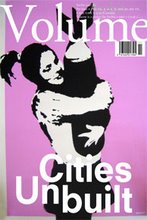
VOLUME #11 Cities Unbuilt
Volume is a project by Archis + AMO + C-LAB + MIT +...

'It seems an eternal distinction: sometimes people build, sometimes they destroy. However, since we have a concept of modernity, we also understand that building is very often based on sheer destruction. It is ‘the price of progress’. A new insight is now emerging: much destruction also has an agenda. It has a precision that reminds us of architecture. It has a formal dimension that reminds us of design. In this issue: explore the sinister creativity of Cities Unbuilt.'

FAST's articles on Lifta will also feature in this issue of Volume magazine, as well as FAST's Maps of Reconstruction and the collaboration work with Partizan Republic and DJ Visser in the South Caucasus.

You can order a copy from http://www.archis.org

Wednesday, February 07, 2007


SAVING LIFTA – A CASE AGAINST ARCHITECTURAL ERASURE

"Architects & Planners for Justice in Palestine" calls on the Israeli Association of United Architects and the Mayor of Jerusalem, to support this campaign to save Lifta from real estate development, and to stop the proposals by Gabriel Cartes of the Groug-Cartes firm, which collaborated with Ze'ev Temkin of TIK Projects.

This is a plea against architectural erasure and the destruction of memory. While Israel proudly preserves its biblical heritage and archaeological sites, the rich Palestinian heritage is being allowed to disappear or is deliberately destroyed.

A poignant example, and an important symbol of this is the 4000 years old village of Lifta, which lies just outside Jerusalem, the nearest Arab village to the Jerusalem wall. It has been abandoned and has remained relatively untouched since the creation of Israel. T he Israeli army and the Irgun killed or drove out the last Palestinian inhabitants in 1948. Today Lifta is more or less a ghost town , frozen in time. The former villagers live mainly in East Jerusalem, Ramallah, Jordan and in exile in the United States.

Now, however, a renovation project by the architect Gabriel Cartes of the Groug-Cartes firm, which collaborated with Ze'ev Temkin of TIK Projects, aims to turn Lifta into an expensive and exclusively Jewish residential area, mainly for Americans. The planned neighborhood would include three hundred luxury flats, a large hotel, a big mall, and a large tourist resort. In the process of carrying out the scheme, hundreds of Palestinian homes, all of which predated the creation of Israel in 1948, would be erased to obliterate any reminder that the area was once a prosperous Arab village – erasing its Palestinian history in the process. Architecture is being used to eradicate ethnic culture, that amounts to cultural vandalism.

Architects and Planners for Justice in Palestine are supporting FAST (Foundation for achieving Seamless Territory) in a campaign to preserve Lifta by being put on the World Monument Watch list of 100 Most Endangered Sites. The Israeli organizations Zokhrot and BIMKOM have also opposed this Israeli real-estate plan.

There is an ongoing ban on ‘internal refugees’ to return to the remnants of their destroyed villages. The Lifta masterplan does not refer to its Palestinian past. In this effort, architecture is being used as a political device to further Israel’s colonial policy.

The “Or Commission” report, which investigated the causes of the riots by the Israeli Arab population in October 2000, is quoted in the written objection filed by BIMKOM in their original defence of Lifta. "The role of the state is not reduced to material matters alone," it states. "Governing authorities must find ways that will enable Arab citizens to express in public life their culture and identity in an appropriate and respectful manner.

"We ask that Liftah is retained as a ruin to be a reminder of its past or it should be allowed to be re-inhabited by survivors or descendants of the original residents. In either case they should be consulted. Four generations later the descendants are still protesting for the right to return.

Yakub Odeh, a Lifta refugee says:“ Land ..that is designated for residential use should be planned such that it will be appropriate for the housing of the original residents of Lifta and their descendants, whose property was taken from them through no wrong of their own. This would enable the purchase or return of the land to them, and would constitute a rectification of the wrongs done to the place and its residents, and not only provide land to people of means who never had the slightest connection or link to the place."

He continues…

“There are 37 Lifta refugees in East Jerusalem and Ramallah, and we have a Lifta Association; and now the internet makes it possible to keep in touch with those that have moved further away. We all want to return to our village. I’m sure we can achieve our dream through peaceful means….We will never give in. They say that every human being is born in the land, but for us Palestinians, our land is born in us.”

Esther Zandberg said in Haaretz in November 2004, when the plan was first presented: “the construction plan that has been under discussion since 1996 is a cause for wonder with regard to why it was ever commissioned. On such a emotionally charged and politically symbolic site, with terrain conditions that are difficult for modern construction, on a site on which the development of road, water or sewage infrastructure would require immense technological effort and heavy monetary expenditure, in a landscape in which any intrusion could be the source of perpetual regret, and on land on which there are no real estate pressures that might have provided an easy excuse, the plan seems opposed to all common sense, harmful to the interests of all of the parties on both sides of the conflict, and perhaps an attempt to conceal evidence of the existence of a people living in a "country without a people."

In conclusion, Dafna Golan Agnon a prominent Israeli sociologist from the Hebrew University:

“It is possible and proper to develop Lifta as a village that preserves the historical Palestinian memory of the place. Preserving the memory of the village and its history could be a focal point for reconciliation between Jewish and Arab citizens, and offer an experience that helps lead to a solution of peace with our neighbors.

In a country that sanctifies memory, erasing Palestinian history is not only immoral, it is also foolish. We will not be able to build a future worthy of the name here if we erase and deny the memory of thousands of Palestinian refugees. It is possible to take their homes and erase their villages from the face of the earth, but as we know from Jewish history, longing for the roots and memories of homes is preserved for many hundreds of years. It is still possible to preserve the village, repair its buildings and turn it into a place of study of the past, forming a basis for dialogue about a common future of Israelis and Palestinians.”

If you would like to add your name to the petition by APJP, please go to:

http://www.apjp.org or mailto:info@apjp.org

Signed

Charles Jencks, Eyal Weizman, Abe Hayeem, Sunand Prasad, Hans Haenlein, Haifa Hammami, Neil Lambert, Wade Sowman, Mike Gwilliam,Joanna Chambers, Antoine Raffoul, Jake BrownIan Martin, Mike Macrae, Phil GusackKate Mackintosh, Martin O’Shea, Stefano FerrariTerry Meade, Fahmi Salameh, Michael GwilliamOsama Hamdan, Steve Fox, John HodgeAdrian King, Joe Lynes, Steve Kessel, Vassilis Ierides, Issa Sarie, Dr. Gaetano Palumbo, Nadia Habash, Rand el haj Hasan, Saleem Jaleel, Tariq Z. Khayyat, Jalal El Ali, Tarek RaghebAmal Moh, Abdulmajid Karanouh

Friday, December 15, 2006

Crime and Retribution

UNESCO says 'Get Real' to a World Heritage nomination for a Palestinian village in Israel.

FAST - 'The Foundation for Achieving Seamless Territory’ is campaigning to save the heritage of a Palestinian village in Israel. The consequences of which can take a significant step towards the reconciliation question that firmly delves within the causes of the Israeli/Palestinian conflict.

On May 15th 2006 a conference at Amsterdam's Debalie cultural centre called 'Reconstruction of Memory' was held by FAST in conjunction and commemoration to the 58th Nakba Day. The Nabka was the Palestinian tragedy that coincided with the creation and Independence of Israel. In that single event of 1948 many hundreds of thousands of Palestinians were forcibly uprooted from their native lands. Before the events of 1948, Muslims and Jews were living relatively in peace. This was also very true in Lifta, a Palestinian village on the north-west edge of Jerusalem. Although the village consisted of 5 big tribes of roughly 3000 people, there was still a Jewish minority who were considered as equal people - they went to the same schools, sat together at the coffee houses, went to each others festivals, and were known to have been living in and sharing the same houses. However, Lifta suffered the same consequences as many other towns and villages that were uprooted during the catastrophe of the Nakba.

Lifta was also the talking point of the conference at Debalie. The village stands obscurely due to nearly 60 years of unhinderance from development. The antiquities of this village consist of a traditional example of arab vernacular architecture cultivated over hundreds of years. Although tens of houses have been either destroyed or deteriorated since the war in 1948 and since then, many of them still remain poised and dominant on the landscape . The uniqueness of Lifta is due to the phenomenon that no conquest has physically re-contextualized the place. Lifta's geographical location within a valley has largely led to the place being protected from the civilization that passes above on the Tel Aviv highway. It is a place that lies frozen between two epochs, two histories, and two cultures. A place untouched by ideological regime change, set within a picturesque landscape and the first remnants of a place to glance as the gateway into Jerusalem.

The architecture of Lifta is important because a generation of people are still able to recognize the place. It exists as a place within the memories of a people, identifiable by the ruins of the buildings and structures cultivated into the landscape. 'Memory' in respect to Lifta is the essence of the place, it is bare without people telling their stories and affirming their bonds. Lifta also bares the scars of the unresolved Israeli-Palestinian conflict. It is a memory in which victimization has formed part of the Palestinian identity of the 'self'; and a memory which defines shared values amongst the Palestinians. An old lady recounts the day her family were forcibly removed from Lifta, "The first attack in May 1948; I was at home with my family - we did not have weapons to defend ourselves. From my family, 5-6 people were killed by the bomb on the coffee shop. A man from our family hit a Jewish bus. They would collect money from each of the houses to buy rifles. In the end, they attacked us. No-one helped from outside. Then we ran to the lower part of Lifta. The militia was hitting everyone in the upper hills of Lifta and then we ran away." She goes on to say, "To see your land and that your land has been taken away and now that we're living in refugee camps, you do feel pain and suffering. If they were to give me a tent I would go back because it is my homeland." FAST believes that this place has the capacity to allow exiled refugees to re-engage with memories associated to the tragic events of the Nakba.

This place also represents a sector of heritage that is understated and over-looked, not fitting the image or the natural assumptions of cultural heritage. We are calling it the 'ordinary', what we can generally accept as places of the everyday - buildings, structures and landscapes reciprocated and cultivated into everyday cultural life. However to be more clear in our distinction of the 'ordinary' as cultural heritage, places which have forged bonds over time between people and place and accustomed the value of becoming identifiable as native places of origins - genealogical foundations. The 'ordinary' in Lifta's context has a real case to be presented as a cultural heritage. Lifta's buildings and structures are every bit as much important to the future of this region. The duality that exists between the memory of a people and the tangible heritage can allow possibilities to directly engage with issues of history and tragedy. It is a place of study and reflection and has the potential to seek consolation through justice, and healing though the opportunity of reconciliation. Lifta can also act as an instrument of dialogue between different cultural allegiances and offer a common vision aimed at cultural development. Lifta has the potential to provide the unique opportunity to show what potentially can be possible in this region. The site contains a 'cultural heritage' which should be regarded as a common-ground to be used as a foundation to be built upon.

However all of this is threatened by a redevelopment plan and this we believe has great consequences. The redevelopment plan will remove the heritage by re-appropriating the architecture with a new name and identity with an indifferent reference to its palestinian heritage. It will eradicate the memory that is currently attributed to the identity of Lifta. The redevelopment plan will change the name of Lifta to Mei Neftoach (Spring) in accordance to an ancient historical name to the place. And architectural mimicry of the Palestinian cultivated houses shall be mass produced around the lands of Lifta to supplement desirable and exclusive developments to cater for hotels and private accommodation for the non-resident Jewish elite. All reference to its cultivated Palestinian heritage will be undermined through forgetfulness; terminally erased.

It has been important for FAST to reflect upon the term of 'cultural heritage' and gather the necessary paths Lifta have to consider to be part of a cultural heritage worthy of protection. The conference at DeBalie consisting of a variety of academics and practicing professionals, either working in the context of Israel or internationally on projects involving heritage. Lifta was placed into a variety of contexts ranging from the destruction of heritages and cultural properties to reconstruction and rehabilitation projects, as well as the real and historical context of the situation of Israel and Palestine. The American architecture historian Andrew Herscher, who spoke at the conference, wrote the reports on the destruction of cultural heritage at the Slobodan Miloševic trial for the UN's International Criminal Tribunal for the Former Yugoslavia for crimes against humanity in Kosovo. The survey was not focused solely on listed monuments and this issue was to raise further debate over the definition of monuments in the trial. An initial distinction between monuments of culture and ordinary religious monuments was not singled out when evaluating destruction to properties of a particular ethnicity. If monuments could be declared as fulfilling cultural and religious function; heritage could also be presumed of comprising of people's 'belief' systems. Was there a case to redefine what constitutes to cultural monuments of protection i.e. 'fulfilling cultural and religious function and comprising of people's beliefs systems'? And could it be proved that the intent to destroy a cultural identity was evident by the complete removal of a sign that a monument ever existed? Andrew Herscher points out that after the war and the destruction of important buildings, the violence of renovation and restoration begins. They are, says Herscher, entirely ideological terms. In Pristina, he says, more damage was inflicted by reconstruction than by war. Political and economic interests determine what, where and how restoration takes place. Similarly, listed monuments in Israel are likely to be conditioned to a considerable extent by ideological considerations; how could they be by-passed? It has been important for FAST to determine to what extent heritage organization's planners and planning conventions would take into consideration 'memory', from Lifta's particular situation, as an invaluable component of conservation practice. We wanted to put across the 3 following questions to UNESCO, ICOMOS and the World Heritage Committee.

- What are the criteria for an 'ordinary environment' to become a monument?

- If 'history is written by the victors'; how can the heritage of the 'losers' be preserved?

- How can the planning community address the political and ideological abuses of heritage?

FAST set out to establish the significance and value of the 'ordinary', and wanted the World Heritage Committee to participate at the very least by answering these questions put forward to them. If the organization could act further, there was an opportunity to engage in a critical discourse. FAST saw these questions also underlining the incentive to create a World Heritage Application. Quite naturally, it would be deemed as unconventional in circumstance and from the point of arrival of a non-governmental organization and not officially from a State. By placing the 'ordinary' in context to protection, whilst gaining a deeper level of understanding of a real situation such as Lifta, could UNESCO set about a practical framework which allowed them to correspond to such cases if they were recognized as heritage? Nevertheless, the aim was to create an application which stepped beyond existing conventions and try and create room for the scope of creativity, of values and professional judgment to encourage a mutual concern for welcoming and developing a cultural intervention. Structures, buildings and places which are nominated for World Heritage have to qualify to a merit of distinction notably appraised as of 'outstanding universal value'. Lifta represented a case of a cultural heritage worthy of recognition by the international community for having the capacity to provide significant cultural opportunities as well as encourage discussion on the awareness and undertaking for protecting volatile cultural heritages.

Lifta represents a bond between a tangible cultural heritage and an intangible cultural heritage. Lifta would have to establish through the development of planning instruments for alternative planning and rectified discourse on the 'ordinary', realization that it can create the criteria to establish itself as heritage worth protecting. To save Lifta is also to know what you’re saving. It is evidence of a history which defines the collective memory and existential identity of the Palestinian people; the scattered remains of a place keep the association of a collective memory alive. Authenticating history is also laying down the foundations for justifiable cultivations. Lifta has the potential to become a contesting ground for a new narrative. The place can provide unique and vital capacity building programs to deal with issues of identity and place constructions as well as national memory. Placing the application under scrutiny is also welcoming a debate which introduces the Nakba into an institutional process. However, by placing the nakba into perspective, there is also controversy for such an application. Firstly, the Nakba is affirmation that the Palestinians identity, their history, their memory does exist. More importantly, it is an affirmation of a dis-continuity to the land. The bond, Lifta, is a potent historical tool because it represents the Nakba - a symbol of retribution. To paraphrase a definition of retribution, "It is to be remembered that one of the primary reasons for the law's existence, indeed the state's existence, is that people are to be relieved of their need to strike out against those who have wronged them. Not to argue the rights or wrongs of it; it is entirely natural for an individual, when injured or harmed by another or others, to seek revenge and retribution. It is potentially harmful to the state if it does not satisfy these needs, these urges." 'Memory' could begin to take on a whole new meaning as it would have to take into account the position of the State. And you can only really justify the protection of Lifta if you are to consider some form of reconciliation process. However, does affirmation of an existential identity allow the Nakba to redeem itself? This question needs to be answered. Lifta is a proponent for Palestinian existentialism that needs its history told within the narrative of the region in which it belongs. Will the Israeli State recognize that a place relating to a Palestinian continuity has an inextricable common history with the Israeli national narrative? The importance of Lifta's ruins is that they are a memory, a monument, a bond, and a possible cultural foundation existing within Israel and adding an extra 'what if' possibility for the nation. Lifta has the potential for an all-inclusive vision. It is a common-ground for identities to delegate on the same space, the same time, the same land for a possible vision for the future.

Ciral Rassool, a heritage academic gave a substantial account of a memory and heritage project that he is trustee to at the Debalie conference in Amsterdam. The District 6 Museum in Cape Town, South Africa is a small, community-based initiative; the museum nevertheless saw itself as being of national significance, telling a national history of forced removals. As an independent space of knowledge-creation, the Museum wanted to tell its story nationally, thereby intervening in the field of cultural representation. Ciral Rassool also practices and writes extensively on the reconstruction of South African heritage after the apartheid - the 'Truth and Reconciliation Commission' was a product of political compromise, which attempted to establish 'the truth' of apartheid's gross violations of human rights, as well as to promote reconciliation of apartheid's victims and perpetrators. In the process of creating an 'official history' of apartheid, apartheids' hidden history was simultaneously revealed and revised as an essential 'building block' for the new nation. The resources of memory were drawn upon in the imaginative reconstruction of South African society through the medium of cultural heritage. It seeks to begin an examination of the cultural workings of heritage, public history and identity formation under conditions of political transition in South Africa. South Africans were also encouraged to consider, narrate and visualize their society and its past, as well as their own identities as individuals within it. It was also in this domain of historical production that important contests were unfolding over the South African past and the dominant discursive forms were contested.

The idea of creating a World Heritage Application was a reference to the attempt of actively suggesting that the history of the Nakba should be established within the history of Israeli consciousness. However, even with our critical explanation to the World Heritage committee, our initial contact was repudiated with the suggestion to 'get real'! However, I do sympathize with the less than a handful of people, as I was told, having to deal with the 400-odd World Heritage applications. Guarantying time for a single organization raising the interest of a single village would be too much to carry out. FASTs' attempt to create a nomination was to also be in protest and representative for all the volatile cultural heritages around the world which are in need of recognition so that their histories are neither appropriated or erased. The current practice of the State defining within its territory control over heritage policies does suggest the problem that maybe all heritages within the border may not be represented. Conventions are not universally representing the 'heritage of all' for the fact that they are not reaching far enough to represent the undermined cultures within predominant cultures who really need representing. Heritage theory, legislation and practice has not caught up yet with the growing acknowledgement of the misuse of cultural heritage. The reality at the moment is that the 'heritage of the losers' is likely to be avoided under the circumstance when you are asking questions with a context such as the State of Israel. International conventions and instruments are not substantial safety nets if they don't reach out to the 'other' cultures that seek protection and saving.

History has the tendency to repeat itself if not contested which is what is happening in Israel at the moment. Territories are shifting, forced removals are the norm, and the Nakba is relived day to day. Whilst a two-state solution is politically and supposedly physically being acting out, let us not forget that dealing with memory and place is vitally important. Cultural reality is also painted on the landscape in that which we recognize. So, is there any possibility of Israel also embracing an alternative vision? Ultimately, it is the Israeli Land Administration (ILA) who has juridical control and authority over Lifta’s land. Lifta still has the opportunity to prove that there is a case for saving the heritage of this village. FAST will continue to campaign and raise awareness in hope to the prospect re-examination by the State of a project of worthwhile recognition and cause for the history of all.