Tuesday, May 29, 2007
Opposing the architects of the occupation
By Esther Zandberg
(This article extracted from Israeli newspaper Haaretz recounts more on APJP's petitions and their efforts to heighten awareness and consolidate support against the violations imposed by discriminating planning techniques. FAST will like to thank the APJP for their generous support for highlighting attention to the Lifta campaign.)
About 200 British and Israeli architects and academics, including people of international renown, have signed a manifesto initiated by the British organization Architects and Planners for Justice in Palestine, which calls on Israeli architects and planners to put an end to being "partners in social, political and economic oppression" in the occupied territories, "which violates the professional ethics acceptable to all."
The manifesto points to three representative projects currently promoted bythe planning authorities: the master plan for the E1 region between the settlement of Ma'aleh Adumim and Jerusalem, which will prevent Palestinianterritorial contiguity; construction in Silwan in East Jerusalem, which involves the demolition of dozens of homes; and a plan to build a luxury neighborhood on the remains of the former Palestinian village of Lifta.
The organization considers participation in these projects, construction in the occupied territories and any planning in Israel that involves discrimination and repression, to be a blatant violation of international conventions, which require professional and ethical responsibility for the social and environmental consequences of planning and construction work. The organization has sent letters on the subject to the International Architects Association and to the Israel Association of United Architects. It has also turned to Jerusalem Mayor Uri Lupolianski and to Minister of Construction and Housing Meir Sheetrit on the matter.
The British organization has been trying for a long time to arouse international awareness on the subject. About two years ago it initiated a boycott against the Israeli architectural community, which does not forbid its members from being involved in the kind of planning and construction the organization defines as unethical. Prior to the opening of the International Architecture Biennale in Venice last September, the organization tried to prevent the presentation of the Israeli exhibition "Life Saver: Typology of Commemoration in Israel," which dealt with the architecture of commemoration, ignoring the Palestinian side. The initiatives did not result in any kind of action, and the architectural community in Israel continues to bury its head in the sand.
Among the signatories to the manifesto, which was initiated by architect Abe Hayeem, the chair of Architects and Planners for Justice in Palestine, are architectural historian Charles Jencks; president of the Royal Institute of British Architects Jack Pringle; American sociologist Saskia Sassen; geographer Oren Yiftachel of Ben-Gurion University in the Negev; and architects Will Alsop of Britain, Zvi Hecker of Israel and Berlin, Yaron Turel of Israel, as well as Israeli Zvi Efrat, who heads the architecture department at the Bezalel Academy of Art and Design.
The manifesto was published in The Times of London and in the British architectural journal Building Design. A new book by architect Eyal Weizman, called "Hollow Land: Israel's Architecture of Occupation," has recently been published in Britain. Weizman, who is among the signatories of the manifesto, was one of the first to point an accusing finger at the Israeli planning community for cooperating, through both silence and action, with a policy of repression and occupation, and placed the subject on the agenda of international architectural discourse.
By Esther Zandberg
(This article extracted from Israeli newspaper Haaretz recounts more on APJP's petitions and their efforts to heighten awareness and consolidate support against the violations imposed by discriminating planning techniques. FAST will like to thank the APJP for their generous support for highlighting attention to the Lifta campaign.)
About 200 British and Israeli architects and academics, including people of international renown, have signed a manifesto initiated by the British organization Architects and Planners for Justice in Palestine, which calls on Israeli architects and planners to put an end to being "partners in social, political and economic oppression" in the occupied territories, "which violates the professional ethics acceptable to all."
The manifesto points to three representative projects currently promoted bythe planning authorities: the master plan for the E1 region between the settlement of Ma'aleh Adumim and Jerusalem, which will prevent Palestinianterritorial contiguity; construction in Silwan in East Jerusalem, which involves the demolition of dozens of homes; and a plan to build a luxury neighborhood on the remains of the former Palestinian village of Lifta.
The organization considers participation in these projects, construction in the occupied territories and any planning in Israel that involves discrimination and repression, to be a blatant violation of international conventions, which require professional and ethical responsibility for the social and environmental consequences of planning and construction work. The organization has sent letters on the subject to the International Architects Association and to the Israel Association of United Architects. It has also turned to Jerusalem Mayor Uri Lupolianski and to Minister of Construction and Housing Meir Sheetrit on the matter.
The British organization has been trying for a long time to arouse international awareness on the subject. About two years ago it initiated a boycott against the Israeli architectural community, which does not forbid its members from being involved in the kind of planning and construction the organization defines as unethical. Prior to the opening of the International Architecture Biennale in Venice last September, the organization tried to prevent the presentation of the Israeli exhibition "Life Saver: Typology of Commemoration in Israel," which dealt with the architecture of commemoration, ignoring the Palestinian side. The initiatives did not result in any kind of action, and the architectural community in Israel continues to bury its head in the sand.
Among the signatories to the manifesto, which was initiated by architect Abe Hayeem, the chair of Architects and Planners for Justice in Palestine, are architectural historian Charles Jencks; president of the Royal Institute of British Architects Jack Pringle; American sociologist Saskia Sassen; geographer Oren Yiftachel of Ben-Gurion University in the Negev; and architects Will Alsop of Britain, Zvi Hecker of Israel and Berlin, Yaron Turel of Israel, as well as Israeli Zvi Efrat, who heads the architecture department at the Bezalel Academy of Art and Design.
The manifesto was published in The Times of London and in the British architectural journal Building Design. A new book by architect Eyal Weizman, called "Hollow Land: Israel's Architecture of Occupation," has recently been published in Britain. Weizman, who is among the signatories of the manifesto, was one of the first to point an accusing finger at the Israeli planning community for cooperating, through both silence and action, with a policy of repression and occupation, and placed the subject on the agenda of international architectural discourse.
Friday, May 25, 2007

Big names urge Israelis to end ‘oppressive’ works
(Article extracted from British 'Building Design' magazine surrounding APJP's 3 Petitions - including support for Lifta campaign)
25 May 2007
By Helen Crump
Alsop, Farrell and MacCormac join call to stop work on schemes that oppress Palestinians.
A host of celebrated architects including Will Alsop, Terry Farrell, Richard MacCormac, Rick Mather and Ted Cullinan have waded into the politics of the Middle East with a challenge to fellow professionals in Israel to cease work that “excludes and oppresses” Palestinians.
The architects, who also include RIBA president Jack Pringle and president-elect Sunand Prasad, have signed a petition organised by Architects & Planners for Justice in Palestine which accuses construction professionals working on three separate Israeli developments of “social, political and economic oppression.”
“APJP asserts that the actions of our fellow professionals working with these enterprises are clearly unethical, immoral and contravene universally recognised professional codes of conduct,” a spokesman said.
“We ask the Israeli Association of United Architects (IAUA) to meet their professional obligations … to declare their opposition to this inhuman occupation.”
The IAUA was unavailable for comment, but the action was condemned as foolish and damaging by Michael Peters, founder and chairman of the Identica brand agency, who has worked extensively with architects in Israel.
“British architects are going to burn their bridges with a number of developers — Israeli, British and European,” he said.
Last year Richard Rogers faced stinging criticism from US clients after he hosted a meeting of APJP (News March 10, 2006).
The petition, which focuses on the village of Silwan in east Jerusalem, the E1 plan for the expansion of Israeli settlement Ma’ele Adumim, and former Palestinian village Lifta, was strongly defended by Alsop.
“I think the Palestinians are living in a prison and they deserve better than that,” he said. “I’d like fellow colleagues in Israel to feel some responsibility about this shabby treatment. Architects are a fairly humanitarian lot and perhaps they could help.”
He added: “This is not against Israel, it’s for Palestine.”
Petition organiser Abe Hayeem, a London-based architect and APJP chair, called his fellow architect supporters “pretty courageous”, and insisted architects would not be deterred from backing causes they supported.
But Peters said British architects did not understand the situation in Israel.“Getting involved in a lobby group can only do a disservice to the whole architectural profession,” he added. “To accuse [Israeli] architects of being complicit is nonsense.”
(Article extracted from British 'Building Design' magazine surrounding APJP's 3 Petitions - including support for Lifta campaign)
25 May 2007
By Helen Crump
Alsop, Farrell and MacCormac join call to stop work on schemes that oppress Palestinians.
A host of celebrated architects including Will Alsop, Terry Farrell, Richard MacCormac, Rick Mather and Ted Cullinan have waded into the politics of the Middle East with a challenge to fellow professionals in Israel to cease work that “excludes and oppresses” Palestinians.
The architects, who also include RIBA president Jack Pringle and president-elect Sunand Prasad, have signed a petition organised by Architects & Planners for Justice in Palestine which accuses construction professionals working on three separate Israeli developments of “social, political and economic oppression.”
“APJP asserts that the actions of our fellow professionals working with these enterprises are clearly unethical, immoral and contravene universally recognised professional codes of conduct,” a spokesman said.
“We ask the Israeli Association of United Architects (IAUA) to meet their professional obligations … to declare their opposition to this inhuman occupation.”
The IAUA was unavailable for comment, but the action was condemned as foolish and damaging by Michael Peters, founder and chairman of the Identica brand agency, who has worked extensively with architects in Israel.
“British architects are going to burn their bridges with a number of developers — Israeli, British and European,” he said.
Last year Richard Rogers faced stinging criticism from US clients after he hosted a meeting of APJP (News March 10, 2006).
The petition, which focuses on the village of Silwan in east Jerusalem, the E1 plan for the expansion of Israeli settlement Ma’ele Adumim, and former Palestinian village Lifta, was strongly defended by Alsop.
“I think the Palestinians are living in a prison and they deserve better than that,” he said. “I’d like fellow colleagues in Israel to feel some responsibility about this shabby treatment. Architects are a fairly humanitarian lot and perhaps they could help.”
He added: “This is not against Israel, it’s for Palestine.”
Petition organiser Abe Hayeem, a London-based architect and APJP chair, called his fellow architect supporters “pretty courageous”, and insisted architects would not be deterred from backing causes they supported.
But Peters said British architects did not understand the situation in Israel.“Getting involved in a lobby group can only do a disservice to the whole architectural profession,” he added. “To accuse [Israeli] architects of being complicit is nonsense.”
Thursday, May 24, 2007

Architects and Planners for Justice in Palestine (APJP) have advertised in The Times (24/05/2007) for support for 3 petitions including Lifta campaign.
Shortly, the APJP will be sending 3 petitions in protest to challenge the unethical actions of Israeli architects and planners. Their half-page advertisement includes a list of signatories from highly acclaimed British and International professionals and academics who have signed the petition in support to the projects. The advertisement reads as follows:
Acting against international law, Israel continues to build settlements on Palestinian territory. Israeli architects and planners have helped build settlements and towns on appropriated Palestinian land. Architects and Planners for Justice in Palestine (APJP) assert that the actions of Israeli architects and planners working in conjunction with this enterprise, are unethical, and contravene professional codes of conduct and UIA codes. It is time to challenge the IAUA and the Israeli government to end such projects. We have launched a petition to highlight 3 projects that typify the appropriation of Palestinian land aided by Israeli architects and other design professionals:
In Silwan 88 Palestinian homes are under threat of demolition. This is part of a development for ultra-religious Israeli settlers on illegally annexed Palestinian land. The E1 Plan expands the largest illegal settlement, Ma'ale Adumim, to link it with metropolitan Jerusalem; it will dissect the northern and southern West Bank, destroying the possibility of a contiguous Palestinian state. Support the campaign to save Lifta, ruins of a Palestinian village, from being converted into a development for wealthy American visitors, to the exclusion of the original inhabitants, their heritage and memory. We call on the Israeli Association of United Architects to adhere to UIA Codes of Coduct, and end the participation of their members and fellow professionals in creating 'facts on the ground' to obliterate the idea of a viable future Palestinian state. If you would like to add your name to the petition or see the complete list of signatories, please go to http://www.apjp.org or mailto:info@apjp.org
Shortly, the APJP will be sending 3 petitions in protest to challenge the unethical actions of Israeli architects and planners. Their half-page advertisement includes a list of signatories from highly acclaimed British and International professionals and academics who have signed the petition in support to the projects. The advertisement reads as follows:
Acting against international law, Israel continues to build settlements on Palestinian territory. Israeli architects and planners have helped build settlements and towns on appropriated Palestinian land. Architects and Planners for Justice in Palestine (APJP) assert that the actions of Israeli architects and planners working in conjunction with this enterprise, are unethical, and contravene professional codes of conduct and UIA codes. It is time to challenge the IAUA and the Israeli government to end such projects. We have launched a petition to highlight 3 projects that typify the appropriation of Palestinian land aided by Israeli architects and other design professionals:
In Silwan 88 Palestinian homes are under threat of demolition. This is part of a development for ultra-religious Israeli settlers on illegally annexed Palestinian land. The E1 Plan expands the largest illegal settlement, Ma'ale Adumim, to link it with metropolitan Jerusalem; it will dissect the northern and southern West Bank, destroying the possibility of a contiguous Palestinian state. Support the campaign to save Lifta, ruins of a Palestinian village, from being converted into a development for wealthy American visitors, to the exclusion of the original inhabitants, their heritage and memory. We call on the Israeli Association of United Architects to adhere to UIA Codes of Coduct, and end the participation of their members and fellow professionals in creating 'facts on the ground' to obliterate the idea of a viable future Palestinian state. If you would like to add your name to the petition or see the complete list of signatories, please go to http://www.apjp.org or mailto:info@apjp.org
Tuesday, May 01, 2007
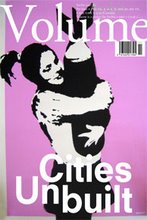
 VOLUME #11 Cities Unbuilt
Volume is a project by Archis + AMO + C-LAB + MIT +...
'It seems an eternal distinction: sometimes people build, sometimes they destroy. However, since we have a concept of modernity, we also understand that building is very often based on sheer destruction. It is ‘the price of progress’. A new insight is now emerging: much destruction also has an agenda. It has a precision that reminds us of architecture. It has a formal dimension that reminds us of design. In this issue: explore the sinister creativity of Cities Unbuilt.'
FAST's articles on Lifta will also feature in this issue of Volume magazine, as well as FAST's Maps of Reconstruction and the collaboration work with Partizan Republic and DJ Visser in the South Caucasus.
You can order a copy from http://www.archis.org
Wednesday, February 07, 2007

SAVING LIFTA – A CASE AGAINST ARCHITECTURAL ERASURE
"Architects & Planners for Justice in Palestine" calls on the Israeli Association of United Architects and the Mayor of Jerusalem, to support this campaign to save Lifta from real estate development, and to stop the proposals by Gabriel Cartes of the Groug-Cartes firm, which collaborated with Ze'ev Temkin of TIK Projects.
This is a plea against architectural erasure and the destruction of memory. While Israel proudly preserves its biblical heritage and archaeological sites, the rich Palestinian heritage is being allowed to disappear or is deliberately destroyed.
A poignant example, and an important symbol of this is the 4000 years old village of Lifta, which lies just outside Jerusalem, the nearest Arab village to the Jerusalem wall. It has been abandoned and has remained relatively untouched since the creation of Israel. T he Israeli army and the Irgun killed or drove out the last Palestinian inhabitants in 1948. Today Lifta is more or less a ghost town , frozen in time. The former villagers live mainly in East Jerusalem, Ramallah, Jordan and in exile in the United States.
Now, however, a renovation project by the architect Gabriel Cartes of the Groug-Cartes firm, which collaborated with Ze'ev Temkin of TIK Projects, aims to turn Lifta into an expensive and exclusively Jewish residential area, mainly for Americans. The planned neighborhood would include three hundred luxury flats, a large hotel, a big mall, and a large tourist resort. In the process of carrying out the scheme, hundreds of Palestinian homes, all of which predated the creation of Israel in 1948, would be erased to obliterate any reminder that the area was once a prosperous Arab village – erasing its Palestinian history in the process. Architecture is being used to eradicate ethnic culture, that amounts to cultural vandalism.
Architects and Planners for Justice in Palestine are supporting FAST (Foundation for achieving Seamless Territory) in a campaign to preserve Lifta by being put on the World Monument Watch list of 100 Most Endangered Sites. The Israeli organizations Zokhrot and BIMKOM have also opposed this Israeli real-estate plan.
There is an ongoing ban on ‘internal refugees’ to return to the remnants of their destroyed villages. The Lifta masterplan does not refer to its Palestinian past. In this effort, architecture is being used as a political device to further Israel’s colonial policy.
The “Or Commission” report, which investigated the causes of the riots by the Israeli Arab population in October 2000, is quoted in the written objection filed by BIMKOM in their original defence of Lifta. "The role of the state is not reduced to material matters alone," it states. "Governing authorities must find ways that will enable Arab citizens to express in public life their culture and identity in an appropriate and respectful manner.
"We ask that Liftah is retained as a ruin to be a reminder of its past or it should be allowed to be re-inhabited by survivors or descendants of the original residents. In either case they should be consulted. Four generations later the descendants are still protesting for the right to return.
Yakub Odeh, a Lifta refugee says:“ Land ..that is designated for residential use should be planned such that it will be appropriate for the housing of the original residents of Lifta and their descendants, whose property was taken from them through no wrong of their own. This would enable the purchase or return of the land to them, and would constitute a rectification of the wrongs done to the place and its residents, and not only provide land to people of means who never had the slightest connection or link to the place."
He continues…
“There are 37 Lifta refugees in East Jerusalem and Ramallah, and we have a Lifta Association; and now the internet makes it possible to keep in touch with those that have moved further away. We all want to return to our village. I’m sure we can achieve our dream through peaceful means….We will never give in. They say that every human being is born in the land, but for us Palestinians, our land is born in us.”
Esther Zandberg said in Haaretz in November 2004, when the plan was first presented: “the construction plan that has been under discussion since 1996 is a cause for wonder with regard to why it was ever commissioned. On such a emotionally charged and politically symbolic site, with terrain conditions that are difficult for modern construction, on a site on which the development of road, water or sewage infrastructure would require immense technological effort and heavy monetary expenditure, in a landscape in which any intrusion could be the source of perpetual regret, and on land on which there are no real estate pressures that might have provided an easy excuse, the plan seems opposed to all common sense, harmful to the interests of all of the parties on both sides of the conflict, and perhaps an attempt to conceal evidence of the existence of a people living in a "country without a people."
In conclusion, Dafna Golan Agnon a prominent Israeli sociologist from the Hebrew University:
“It is possible and proper to develop Lifta as a village that preserves the historical Palestinian memory of the place. Preserving the memory of the village and its history could be a focal point for reconciliation between Jewish and Arab citizens, and offer an experience that helps lead to a solution of peace with our neighbors.
In a country that sanctifies memory, erasing Palestinian history is not only immoral, it is also foolish. We will not be able to build a future worthy of the name here if we erase and deny the memory of thousands of Palestinian refugees. It is possible to take their homes and erase their villages from the face of the earth, but as we know from Jewish history, longing for the roots and memories of homes is preserved for many hundreds of years. It is still possible to preserve the village, repair its buildings and turn it into a place of study of the past, forming a basis for dialogue about a common future of Israelis and Palestinians.”
If you would like to add your name to the petition by APJP, please go to:
Signed
Charles Jencks, Eyal Weizman, Abe Hayeem, Sunand Prasad, Hans Haenlein, Haifa Hammami, Neil Lambert, Wade Sowman, Mike Gwilliam,Joanna Chambers, Antoine Raffoul, Jake BrownIan Martin, Mike Macrae, Phil GusackKate Mackintosh, Martin O’Shea, Stefano FerrariTerry Meade, Fahmi Salameh, Michael GwilliamOsama Hamdan, Steve Fox, John HodgeAdrian King, Joe Lynes, Steve Kessel, Vassilis Ierides, Issa Sarie, Dr. Gaetano Palumbo, Nadia Habash, Rand el haj Hasan, Saleem Jaleel, Tariq Z. Khayyat, Jalal El Ali, Tarek RaghebAmal Moh, Abdulmajid Karanouh
"Architects & Planners for Justice in Palestine" calls on the Israeli Association of United Architects and the Mayor of Jerusalem, to support this campaign to save Lifta from real estate development, and to stop the proposals by Gabriel Cartes of the Groug-Cartes firm, which collaborated with Ze'ev Temkin of TIK Projects.
This is a plea against architectural erasure and the destruction of memory. While Israel proudly preserves its biblical heritage and archaeological sites, the rich Palestinian heritage is being allowed to disappear or is deliberately destroyed.
A poignant example, and an important symbol of this is the 4000 years old village of Lifta, which lies just outside Jerusalem, the nearest Arab village to the Jerusalem wall. It has been abandoned and has remained relatively untouched since the creation of Israel. T he Israeli army and the Irgun killed or drove out the last Palestinian inhabitants in 1948. Today Lifta is more or less a ghost town , frozen in time. The former villagers live mainly in East Jerusalem, Ramallah, Jordan and in exile in the United States.
Now, however, a renovation project by the architect Gabriel Cartes of the Groug-Cartes firm, which collaborated with Ze'ev Temkin of TIK Projects, aims to turn Lifta into an expensive and exclusively Jewish residential area, mainly for Americans. The planned neighborhood would include three hundred luxury flats, a large hotel, a big mall, and a large tourist resort. In the process of carrying out the scheme, hundreds of Palestinian homes, all of which predated the creation of Israel in 1948, would be erased to obliterate any reminder that the area was once a prosperous Arab village – erasing its Palestinian history in the process. Architecture is being used to eradicate ethnic culture, that amounts to cultural vandalism.
Architects and Planners for Justice in Palestine are supporting FAST (Foundation for achieving Seamless Territory) in a campaign to preserve Lifta by being put on the World Monument Watch list of 100 Most Endangered Sites. The Israeli organizations Zokhrot and BIMKOM have also opposed this Israeli real-estate plan.
There is an ongoing ban on ‘internal refugees’ to return to the remnants of their destroyed villages. The Lifta masterplan does not refer to its Palestinian past. In this effort, architecture is being used as a political device to further Israel’s colonial policy.
The “Or Commission” report, which investigated the causes of the riots by the Israeli Arab population in October 2000, is quoted in the written objection filed by BIMKOM in their original defence of Lifta. "The role of the state is not reduced to material matters alone," it states. "Governing authorities must find ways that will enable Arab citizens to express in public life their culture and identity in an appropriate and respectful manner.
"We ask that Liftah is retained as a ruin to be a reminder of its past or it should be allowed to be re-inhabited by survivors or descendants of the original residents. In either case they should be consulted. Four generations later the descendants are still protesting for the right to return.
Yakub Odeh, a Lifta refugee says:“ Land ..that is designated for residential use should be planned such that it will be appropriate for the housing of the original residents of Lifta and their descendants, whose property was taken from them through no wrong of their own. This would enable the purchase or return of the land to them, and would constitute a rectification of the wrongs done to the place and its residents, and not only provide land to people of means who never had the slightest connection or link to the place."
He continues…
“There are 37 Lifta refugees in East Jerusalem and Ramallah, and we have a Lifta Association; and now the internet makes it possible to keep in touch with those that have moved further away. We all want to return to our village. I’m sure we can achieve our dream through peaceful means….We will never give in. They say that every human being is born in the land, but for us Palestinians, our land is born in us.”
Esther Zandberg said in Haaretz in November 2004, when the plan was first presented: “the construction plan that has been under discussion since 1996 is a cause for wonder with regard to why it was ever commissioned. On such a emotionally charged and politically symbolic site, with terrain conditions that are difficult for modern construction, on a site on which the development of road, water or sewage infrastructure would require immense technological effort and heavy monetary expenditure, in a landscape in which any intrusion could be the source of perpetual regret, and on land on which there are no real estate pressures that might have provided an easy excuse, the plan seems opposed to all common sense, harmful to the interests of all of the parties on both sides of the conflict, and perhaps an attempt to conceal evidence of the existence of a people living in a "country without a people."
In conclusion, Dafna Golan Agnon a prominent Israeli sociologist from the Hebrew University:
“It is possible and proper to develop Lifta as a village that preserves the historical Palestinian memory of the place. Preserving the memory of the village and its history could be a focal point for reconciliation between Jewish and Arab citizens, and offer an experience that helps lead to a solution of peace with our neighbors.
In a country that sanctifies memory, erasing Palestinian history is not only immoral, it is also foolish. We will not be able to build a future worthy of the name here if we erase and deny the memory of thousands of Palestinian refugees. It is possible to take their homes and erase their villages from the face of the earth, but as we know from Jewish history, longing for the roots and memories of homes is preserved for many hundreds of years. It is still possible to preserve the village, repair its buildings and turn it into a place of study of the past, forming a basis for dialogue about a common future of Israelis and Palestinians.”
If you would like to add your name to the petition by APJP, please go to:
http://www.apjp.org or mailto:info@apjp.org
Signed
Charles Jencks, Eyal Weizman, Abe Hayeem, Sunand Prasad, Hans Haenlein, Haifa Hammami, Neil Lambert, Wade Sowman, Mike Gwilliam,Joanna Chambers, Antoine Raffoul, Jake BrownIan Martin, Mike Macrae, Phil GusackKate Mackintosh, Martin O’Shea, Stefano FerrariTerry Meade, Fahmi Salameh, Michael GwilliamOsama Hamdan, Steve Fox, John HodgeAdrian King, Joe Lynes, Steve Kessel, Vassilis Ierides, Issa Sarie, Dr. Gaetano Palumbo, Nadia Habash, Rand el haj Hasan, Saleem Jaleel, Tariq Z. Khayyat, Jalal El Ali, Tarek RaghebAmal Moh, Abdulmajid Karanouh
Friday, December 15, 2006

Crime and Retribution
UNESCO says 'Get Real' to a World Heritage nomination for a Palestinian village in Israel.
FAST - 'The Foundation for Achieving Seamless Territory’ is campaigning to save the heritage of a Palestinian village in Israel. The consequences of which can take a significant step towards the reconciliation question that firmly delves within the causes of the Israeli/Palestinian conflict.
On May 15th 2006 a conference at Amsterdam's Debalie cultural centre called 'Reconstruction of Memory' was held by FAST in conjunction and commemoration to the 58th Nakba Day. The Nabka was the Palestinian tragedy that coincided with the creation and Independence of Israel. In that single event of 1948 many hundreds of thousands of Palestinians were forcibly uprooted from their native lands. Before the events of 1948, Muslims and Jews were living relatively in peace. This was also very true in Lifta, a Palestinian village on the north-west edge of Jerusalem. Although the village consisted of 5 big tribes of roughly 3000 people, there was still a Jewish minority who were considered as equal people - they went to the same schools, sat together at the coffee houses, went to each others festivals, and were known to have been living in and sharing the same houses. However, Lifta suffered the same consequences as many other towns and villages that were uprooted during the catastrophe of the Nakba.
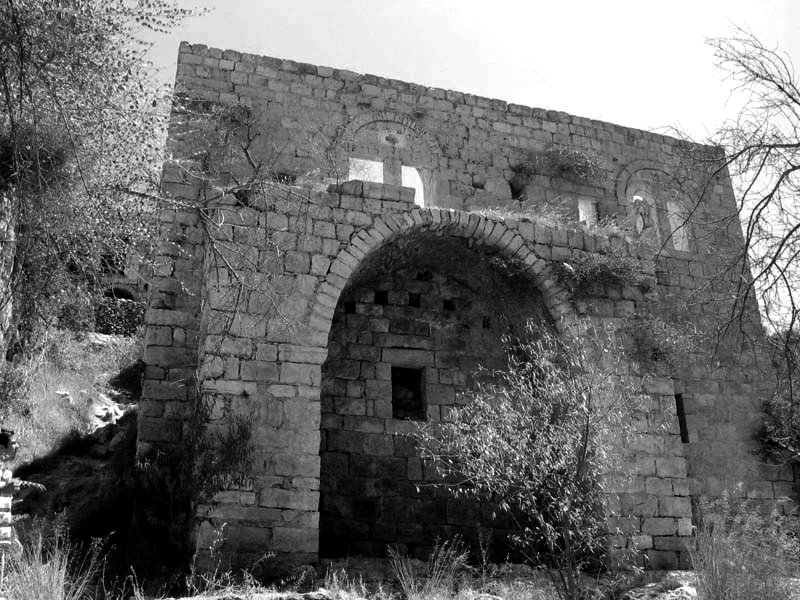
Lifta was also the talking point of the conference at Debalie. The village stands obscurely due to nearly 60 years of unhinderance from development. The antiquities of this village consist of a traditional example of arab vernacular architecture cultivated over hundreds of years. Although tens of houses have been either destroyed or deteriorated since the war in 1948 and since then, many of them still remain poised and dominant on the landscape . The uniqueness of Lifta is due to the phenomenon that no conquest has physically re-contextualized the place. Lifta's geographical location within a valley has largely led to the place being protected from the civilization that passes above on the Tel Aviv highway. It is a place that lies frozen between two epochs, two histories, and two cultures. A place untouched by ideological regime change, set within a picturesque landscape and the first remnants of a place to glance as the gateway into Jerusalem.
The architecture of Lifta is important because a generation of people are still able to recognize the place. It exists as a place within the memories of a people, identifiable by the ruins of the buildings and structures cultivated into the landscape. 'Memory' in respect to Lifta is the essence of the place, it is bare without people telling their stories and affirming their bonds. Lifta also bares the scars of the unresolved Israeli-Palestinian conflict. It is a memory in which victimization has formed part of the Palestinian identity of the 'self'; and a memory which defines shared values amongst the Palestinians. An old lady recounts the day her family were forcibly removed from Lifta, "The first attack in May 1948; I was at home with my family - we did not have weapons to defend ourselves. From my family, 5-6 people were killed by the bomb on the coffee shop. A man from our family hit a Jewish bus. They would collect money from each of the houses to buy rifles. In the end, they attacked us. No-one helped from outside. Then we ran to the lower part of Lifta. The militia was hitting everyone in the upper hills of Lifta and then we ran away." She goes on to say, "To see your land and that your land has been taken away and now that we're living in refugee camps, you do feel pain and suffering. If they were to give me a tent I would go back because it is my homeland." FAST believes that this place has the capacity to allow exiled refugees to re-engage with memories associated to the tragic events of the Nakba.
This place also represents a sector of heritage that is understated and over-looked, not fitting the image or the natural assumptions of cultural heritage. We are calling it the 'ordinary', what we can generally accept as places of the everyday - buildings, structures and landscapes reciprocated and cultivated into everyday cultural life. However to be more clear in our distinction of the 'ordinary' as cultural heritage, places which have forged bonds over time between people and place and accustomed the value of becoming identifiable as native places of origins - genealogical foundations. The 'ordinary' in Lifta's context has a real case to be presented as a cultural heritage. Lifta's buildings and structures are every bit as much important to the future of this region. The duality that exists between the memory of a people and the tangible heritage can allow possibilities to directly engage with issues of history and tragedy. It is a place of study and reflection and has the potential to seek consolation through justice, and healing though the opportunity of reconciliation. Lifta can also act as an instrument of dialogue between different cultural allegiances and offer a common vision aimed at cultural development. Lifta has the potential to provide the unique opportunity to show what potentially can be possible in this region. The site contains a 'cultural heritage' which should be regarded as a common-ground to be used as a foundation to be built upon.
However all of this is threatened by a redevelopment plan and this we believe has great consequences. The redevelopment plan will remove the heritage by re-appropriating the architecture with a new name and identity with an indifferent reference to its palestinian heritage. It will eradicate the memory that is currently attributed to the identity of Lifta. The redevelopment plan will change the name of Lifta to Mei Neftoach (Spring) in accordance to an ancient historical name to the place. And architectural mimicry of the Palestinian cultivated houses shall be mass produced around the lands of Lifta to supplement desirable and exclusive developments to cater for hotels and private accommodation for the non-resident Jewish elite. All reference to its cultivated Palestinian heritage will be undermined through forgetfulness; terminally erased.
It has been important for FAST to reflect upon the term of 'cultural heritage' and gather the necessary paths Lifta have to consider to be part of a cultural heritage worthy of protection. The conference at DeBalie consisting of a variety of academics and practicing professionals, either working in the context of Israel or internationally on projects involving heritage. Lifta was placed into a variety of contexts ranging from the destruction of heritages and cultural properties to reconstruction and rehabilitation projects, as well as the real and historical context of the situation of Israel and Palestine. The American architecture historian Andrew Herscher, who spoke at the conference, wrote the reports on the destruction of cultural heritage at the Slobodan Miloševic trial for the UN's International Criminal Tribunal for the Former Yugoslavia for crimes against humanity in Kosovo. The survey was not focused solely on listed monuments and this issue was to raise further debate over the definition of monuments in the trial. An initial distinction between monuments of culture and ordinary religious monuments was not singled out when evaluating destruction to properties of a particular ethnicity. If monuments could be declared as fulfilling cultural and religious function; heritage could also be presumed of comprising of people's 'belief' systems. Was there a case to redefine what constitutes to cultural monuments of protection i.e. 'fulfilling cultural and religious function and comprising of people's beliefs systems'? And could it be proved that the intent to destroy a cultural identity was evident by the complete removal of a sign that a monument ever existed? Andrew Herscher points out that after the war and the destruction of important buildings, the violence of renovation and restoration begins. They are, says Herscher, entirely ideological terms. In Pristina, he says, more damage was inflicted by reconstruction than by war. Political and economic interests determine what, where and how restoration takes place. Similarly, listed monuments in Israel are likely to be conditioned to a considerable extent by ideological considerations; how could they be by-passed? It has been important for FAST to determine to what extent heritage organization's planners and planning conventions would take into consideration 'memory', from Lifta's particular situation, as an invaluable component of conservation practice. We wanted to put across the 3 following questions to UNESCO, ICOMOS and the World Heritage Committee.
- What are the criteria for an 'ordinary environment' to become a monument?
- If 'history is written by the victors'; how can the heritage of the 'losers' be preserved?
- How can the planning community address the political and ideological abuses of heritage?
FAST set out to establish the significance and value of the 'ordinary', and wanted the World Heritage Committee to participate at the very least by answering these questions put forward to them. If the organization could act further, there was an opportunity to engage in a critical discourse. FAST saw these questions also underlining the incentive to create a World Heritage Application. Quite naturally, it would be deemed as unconventional in circumstance and from the point of arrival of a non-governmental organization and not officially from a State. By placing the 'ordinary' in context to protection, whilst gaining a deeper level of understanding of a real situation such as Lifta, could UNESCO set about a practical framework which allowed them to correspond to such cases if they were recognized as heritage? Nevertheless, the aim was to create an application which stepped beyond existing conventions and try and create room for the scope of creativity, of values and professional judgment to encourage a mutual concern for welcoming and developing a cultural intervention. Structures, buildings and places which are nominated for World Heritage have to qualify to a merit of distinction notably appraised as of 'outstanding universal value'. Lifta represented a case of a cultural heritage worthy of recognition by the international community for having the capacity to provide significant cultural opportunities as well as encourage discussion on the awareness and undertaking for protecting volatile cultural heritages.
Lifta represents a bond between a tangible cultural heritage and an intangible cultural heritage. Lifta would have to establish through the development of planning instruments for alternative planning and rectified discourse on the 'ordinary', realization that it can create the criteria to establish itself as heritage worth protecting. To save Lifta is also to know what you’re saving. It is evidence of a history which defines the collective memory and existential identity of the Palestinian people; the scattered remains of a place keep the association of a collective memory alive. Authenticating history is also laying down the foundations for justifiable cultivations. Lifta has the potential to become a contesting ground for a new narrative. The place can provide unique and vital capacity building programs to deal with issues of identity and place constructions as well as national memory. Placing the application under scrutiny is also welcoming a debate which introduces the Nakba into an institutional process. However, by placing the nakba into perspective, there is also controversy for such an application. Firstly, the Nakba is affirmation that the Palestinians identity, their history, their memory does exist. More importantly, it is an affirmation of a dis-continuity to the land. The bond, Lifta, is a potent historical tool because it represents the Nakba - a symbol of retribution. To paraphrase a definition of retribution, "It is to be remembered that one of the primary reasons for the law's existence, indeed the state's existence, is that people are to be relieved of their need to strike out against those who have wronged them. Not to argue the rights or wrongs of it; it is entirely natural for an individual, when injured or harmed by another or others, to seek revenge and retribution. It is potentially harmful to the state if it does not satisfy these needs, these urges." 'Memory' could begin to take on a whole new meaning as it would have to take into account the position of the State. And you can only really justify the protection of Lifta if you are to consider some form of reconciliation process. However, does affirmation of an existential identity allow the Nakba to redeem itself? This question needs to be answered. Lifta is a proponent for Palestinian existentialism that needs its history told within the narrative of the region in which it belongs. Will the Israeli State recognize that a place relating to a Palestinian continuity has an inextricable common history with the Israeli national narrative? The importance of Lifta's ruins is that they are a memory, a monument, a bond, and a possible cultural foundation existing within Israel and adding an extra 'what if' possibility for the nation. Lifta has the potential for an all-inclusive vision. It is a common-ground for identities to delegate on the same space, the same time, the same land for a possible vision for the future.
Ciral Rassool, a heritage academic gave a substantial account of a memory and heritage project that he is trustee to at the Debalie conference in Amsterdam. The District 6 Museum in Cape Town, South Africa is a small, community-based initiative; the museum nevertheless saw itself as being of national significance, telling a national history of forced removals. As an independent space of knowledge-creation, the Museum wanted to tell its story nationally, thereby intervening in the field of cultural representation. Ciral Rassool also practices and writes extensively on the reconstruction of South African heritage after the apartheid - the 'Truth and Reconciliation Commission' was a product of political compromise, which attempted to establish 'the truth' of apartheid's gross violations of human rights, as well as to promote reconciliation of apartheid's victims and perpetrators. In the process of creating an 'official history' of apartheid, apartheids' hidden history was simultaneously revealed and revised as an essential 'building block' for the new nation. The resources of memory were drawn upon in the imaginative reconstruction of South African society through the medium of cultural heritage. It seeks to begin an examination of the cultural workings of heritage, public history and identity formation under conditions of political transition in South Africa. South Africans were also encouraged to consider, narrate and visualize their society and its past, as well as their own identities as individuals within it. It was also in this domain of historical production that important contests were unfolding over the South African past and the dominant discursive forms were contested.
The idea of creating a World Heritage Application was a reference to the attempt of actively suggesting that the history of the Nakba should be established within the history of Israeli consciousness. However, even with our critical explanation to the World Heritage committee, our initial contact was repudiated with the suggestion to 'get real'! However, I do sympathize with the less than a handful of people, as I was told, having to deal with the 400-odd World Heritage applications. Guarantying time for a single organization raising the interest of a single village would be too much to carry out. FASTs' attempt to create a nomination was to also be in protest and representative for all the volatile cultural heritages around the world which are in need of recognition so that their histories are neither appropriated or erased. The current practice of the State defining within its territory control over heritage policies does suggest the problem that maybe all heritages within the border may not be represented. Conventions are not universally representing the 'heritage of all' for the fact that they are not reaching far enough to represent the undermined cultures within predominant cultures who really need representing. Heritage theory, legislation and practice has not caught up yet with the growing acknowledgement of the misuse of cultural heritage. The reality at the moment is that the 'heritage of the losers' is likely to be avoided under the circumstance when you are asking questions with a context such as the State of Israel. International conventions and instruments are not substantial safety nets if they don't reach out to the 'other' cultures that seek protection and saving.
History has the tendency to repeat itself if not contested which is what is happening in Israel at the moment. Territories are shifting, forced removals are the norm, and the Nakba is relived day to day. Whilst a two-state solution is politically and supposedly physically being acting out, let us not forget that dealing with memory and place is vitally important. Cultural reality is also painted on the landscape in that which we recognize. So, is there any possibility of Israel also embracing an alternative vision? Ultimately, it is the Israeli Land Administration (ILA) who has juridical control and authority over Lifta’s land. Lifta still has the opportunity to prove that there is a case for saving the heritage of this village. FAST will continue to campaign and raise awareness in hope to the prospect re-examination by the State of a project of worthwhile recognition and cause for the history of all.
UNESCO says 'Get Real' to a World Heritage nomination for a Palestinian village in Israel.
FAST - 'The Foundation for Achieving Seamless Territory’ is campaigning to save the heritage of a Palestinian village in Israel. The consequences of which can take a significant step towards the reconciliation question that firmly delves within the causes of the Israeli/Palestinian conflict.
On May 15th 2006 a conference at Amsterdam's Debalie cultural centre called 'Reconstruction of Memory' was held by FAST in conjunction and commemoration to the 58th Nakba Day. The Nabka was the Palestinian tragedy that coincided with the creation and Independence of Israel. In that single event of 1948 many hundreds of thousands of Palestinians were forcibly uprooted from their native lands. Before the events of 1948, Muslims and Jews were living relatively in peace. This was also very true in Lifta, a Palestinian village on the north-west edge of Jerusalem. Although the village consisted of 5 big tribes of roughly 3000 people, there was still a Jewish minority who were considered as equal people - they went to the same schools, sat together at the coffee houses, went to each others festivals, and were known to have been living in and sharing the same houses. However, Lifta suffered the same consequences as many other towns and villages that were uprooted during the catastrophe of the Nakba.
Lifta was also the talking point of the conference at Debalie. The village stands obscurely due to nearly 60 years of unhinderance from development. The antiquities of this village consist of a traditional example of arab vernacular architecture cultivated over hundreds of years. Although tens of houses have been either destroyed or deteriorated since the war in 1948 and since then, many of them still remain poised and dominant on the landscape . The uniqueness of Lifta is due to the phenomenon that no conquest has physically re-contextualized the place. Lifta's geographical location within a valley has largely led to the place being protected from the civilization that passes above on the Tel Aviv highway. It is a place that lies frozen between two epochs, two histories, and two cultures. A place untouched by ideological regime change, set within a picturesque landscape and the first remnants of a place to glance as the gateway into Jerusalem.
The architecture of Lifta is important because a generation of people are still able to recognize the place. It exists as a place within the memories of a people, identifiable by the ruins of the buildings and structures cultivated into the landscape. 'Memory' in respect to Lifta is the essence of the place, it is bare without people telling their stories and affirming their bonds. Lifta also bares the scars of the unresolved Israeli-Palestinian conflict. It is a memory in which victimization has formed part of the Palestinian identity of the 'self'; and a memory which defines shared values amongst the Palestinians. An old lady recounts the day her family were forcibly removed from Lifta, "The first attack in May 1948; I was at home with my family - we did not have weapons to defend ourselves. From my family, 5-6 people were killed by the bomb on the coffee shop. A man from our family hit a Jewish bus. They would collect money from each of the houses to buy rifles. In the end, they attacked us. No-one helped from outside. Then we ran to the lower part of Lifta. The militia was hitting everyone in the upper hills of Lifta and then we ran away." She goes on to say, "To see your land and that your land has been taken away and now that we're living in refugee camps, you do feel pain and suffering. If they were to give me a tent I would go back because it is my homeland." FAST believes that this place has the capacity to allow exiled refugees to re-engage with memories associated to the tragic events of the Nakba.
This place also represents a sector of heritage that is understated and over-looked, not fitting the image or the natural assumptions of cultural heritage. We are calling it the 'ordinary', what we can generally accept as places of the everyday - buildings, structures and landscapes reciprocated and cultivated into everyday cultural life. However to be more clear in our distinction of the 'ordinary' as cultural heritage, places which have forged bonds over time between people and place and accustomed the value of becoming identifiable as native places of origins - genealogical foundations. The 'ordinary' in Lifta's context has a real case to be presented as a cultural heritage. Lifta's buildings and structures are every bit as much important to the future of this region. The duality that exists between the memory of a people and the tangible heritage can allow possibilities to directly engage with issues of history and tragedy. It is a place of study and reflection and has the potential to seek consolation through justice, and healing though the opportunity of reconciliation. Lifta can also act as an instrument of dialogue between different cultural allegiances and offer a common vision aimed at cultural development. Lifta has the potential to provide the unique opportunity to show what potentially can be possible in this region. The site contains a 'cultural heritage' which should be regarded as a common-ground to be used as a foundation to be built upon.
However all of this is threatened by a redevelopment plan and this we believe has great consequences. The redevelopment plan will remove the heritage by re-appropriating the architecture with a new name and identity with an indifferent reference to its palestinian heritage. It will eradicate the memory that is currently attributed to the identity of Lifta. The redevelopment plan will change the name of Lifta to Mei Neftoach (Spring) in accordance to an ancient historical name to the place. And architectural mimicry of the Palestinian cultivated houses shall be mass produced around the lands of Lifta to supplement desirable and exclusive developments to cater for hotels and private accommodation for the non-resident Jewish elite. All reference to its cultivated Palestinian heritage will be undermined through forgetfulness; terminally erased.
It has been important for FAST to reflect upon the term of 'cultural heritage' and gather the necessary paths Lifta have to consider to be part of a cultural heritage worthy of protection. The conference at DeBalie consisting of a variety of academics and practicing professionals, either working in the context of Israel or internationally on projects involving heritage. Lifta was placed into a variety of contexts ranging from the destruction of heritages and cultural properties to reconstruction and rehabilitation projects, as well as the real and historical context of the situation of Israel and Palestine. The American architecture historian Andrew Herscher, who spoke at the conference, wrote the reports on the destruction of cultural heritage at the Slobodan Miloševic trial for the UN's International Criminal Tribunal for the Former Yugoslavia for crimes against humanity in Kosovo. The survey was not focused solely on listed monuments and this issue was to raise further debate over the definition of monuments in the trial. An initial distinction between monuments of culture and ordinary religious monuments was not singled out when evaluating destruction to properties of a particular ethnicity. If monuments could be declared as fulfilling cultural and religious function; heritage could also be presumed of comprising of people's 'belief' systems. Was there a case to redefine what constitutes to cultural monuments of protection i.e. 'fulfilling cultural and religious function and comprising of people's beliefs systems'? And could it be proved that the intent to destroy a cultural identity was evident by the complete removal of a sign that a monument ever existed? Andrew Herscher points out that after the war and the destruction of important buildings, the violence of renovation and restoration begins. They are, says Herscher, entirely ideological terms. In Pristina, he says, more damage was inflicted by reconstruction than by war. Political and economic interests determine what, where and how restoration takes place. Similarly, listed monuments in Israel are likely to be conditioned to a considerable extent by ideological considerations; how could they be by-passed? It has been important for FAST to determine to what extent heritage organization's planners and planning conventions would take into consideration 'memory', from Lifta's particular situation, as an invaluable component of conservation practice. We wanted to put across the 3 following questions to UNESCO, ICOMOS and the World Heritage Committee.
- What are the criteria for an 'ordinary environment' to become a monument?
- If 'history is written by the victors'; how can the heritage of the 'losers' be preserved?
- How can the planning community address the political and ideological abuses of heritage?
FAST set out to establish the significance and value of the 'ordinary', and wanted the World Heritage Committee to participate at the very least by answering these questions put forward to them. If the organization could act further, there was an opportunity to engage in a critical discourse. FAST saw these questions also underlining the incentive to create a World Heritage Application. Quite naturally, it would be deemed as unconventional in circumstance and from the point of arrival of a non-governmental organization and not officially from a State. By placing the 'ordinary' in context to protection, whilst gaining a deeper level of understanding of a real situation such as Lifta, could UNESCO set about a practical framework which allowed them to correspond to such cases if they were recognized as heritage? Nevertheless, the aim was to create an application which stepped beyond existing conventions and try and create room for the scope of creativity, of values and professional judgment to encourage a mutual concern for welcoming and developing a cultural intervention. Structures, buildings and places which are nominated for World Heritage have to qualify to a merit of distinction notably appraised as of 'outstanding universal value'. Lifta represented a case of a cultural heritage worthy of recognition by the international community for having the capacity to provide significant cultural opportunities as well as encourage discussion on the awareness and undertaking for protecting volatile cultural heritages.
Lifta represents a bond between a tangible cultural heritage and an intangible cultural heritage. Lifta would have to establish through the development of planning instruments for alternative planning and rectified discourse on the 'ordinary', realization that it can create the criteria to establish itself as heritage worth protecting. To save Lifta is also to know what you’re saving. It is evidence of a history which defines the collective memory and existential identity of the Palestinian people; the scattered remains of a place keep the association of a collective memory alive. Authenticating history is also laying down the foundations for justifiable cultivations. Lifta has the potential to become a contesting ground for a new narrative. The place can provide unique and vital capacity building programs to deal with issues of identity and place constructions as well as national memory. Placing the application under scrutiny is also welcoming a debate which introduces the Nakba into an institutional process. However, by placing the nakba into perspective, there is also controversy for such an application. Firstly, the Nakba is affirmation that the Palestinians identity, their history, their memory does exist. More importantly, it is an affirmation of a dis-continuity to the land. The bond, Lifta, is a potent historical tool because it represents the Nakba - a symbol of retribution. To paraphrase a definition of retribution, "It is to be remembered that one of the primary reasons for the law's existence, indeed the state's existence, is that people are to be relieved of their need to strike out against those who have wronged them. Not to argue the rights or wrongs of it; it is entirely natural for an individual, when injured or harmed by another or others, to seek revenge and retribution. It is potentially harmful to the state if it does not satisfy these needs, these urges." 'Memory' could begin to take on a whole new meaning as it would have to take into account the position of the State. And you can only really justify the protection of Lifta if you are to consider some form of reconciliation process. However, does affirmation of an existential identity allow the Nakba to redeem itself? This question needs to be answered. Lifta is a proponent for Palestinian existentialism that needs its history told within the narrative of the region in which it belongs. Will the Israeli State recognize that a place relating to a Palestinian continuity has an inextricable common history with the Israeli national narrative? The importance of Lifta's ruins is that they are a memory, a monument, a bond, and a possible cultural foundation existing within Israel and adding an extra 'what if' possibility for the nation. Lifta has the potential for an all-inclusive vision. It is a common-ground for identities to delegate on the same space, the same time, the same land for a possible vision for the future.
Ciral Rassool, a heritage academic gave a substantial account of a memory and heritage project that he is trustee to at the Debalie conference in Amsterdam. The District 6 Museum in Cape Town, South Africa is a small, community-based initiative; the museum nevertheless saw itself as being of national significance, telling a national history of forced removals. As an independent space of knowledge-creation, the Museum wanted to tell its story nationally, thereby intervening in the field of cultural representation. Ciral Rassool also practices and writes extensively on the reconstruction of South African heritage after the apartheid - the 'Truth and Reconciliation Commission' was a product of political compromise, which attempted to establish 'the truth' of apartheid's gross violations of human rights, as well as to promote reconciliation of apartheid's victims and perpetrators. In the process of creating an 'official history' of apartheid, apartheids' hidden history was simultaneously revealed and revised as an essential 'building block' for the new nation. The resources of memory were drawn upon in the imaginative reconstruction of South African society through the medium of cultural heritage. It seeks to begin an examination of the cultural workings of heritage, public history and identity formation under conditions of political transition in South Africa. South Africans were also encouraged to consider, narrate and visualize their society and its past, as well as their own identities as individuals within it. It was also in this domain of historical production that important contests were unfolding over the South African past and the dominant discursive forms were contested.
The idea of creating a World Heritage Application was a reference to the attempt of actively suggesting that the history of the Nakba should be established within the history of Israeli consciousness. However, even with our critical explanation to the World Heritage committee, our initial contact was repudiated with the suggestion to 'get real'! However, I do sympathize with the less than a handful of people, as I was told, having to deal with the 400-odd World Heritage applications. Guarantying time for a single organization raising the interest of a single village would be too much to carry out. FASTs' attempt to create a nomination was to also be in protest and representative for all the volatile cultural heritages around the world which are in need of recognition so that their histories are neither appropriated or erased. The current practice of the State defining within its territory control over heritage policies does suggest the problem that maybe all heritages within the border may not be represented. Conventions are not universally representing the 'heritage of all' for the fact that they are not reaching far enough to represent the undermined cultures within predominant cultures who really need representing. Heritage theory, legislation and practice has not caught up yet with the growing acknowledgement of the misuse of cultural heritage. The reality at the moment is that the 'heritage of the losers' is likely to be avoided under the circumstance when you are asking questions with a context such as the State of Israel. International conventions and instruments are not substantial safety nets if they don't reach out to the 'other' cultures that seek protection and saving.
History has the tendency to repeat itself if not contested which is what is happening in Israel at the moment. Territories are shifting, forced removals are the norm, and the Nakba is relived day to day. Whilst a two-state solution is politically and supposedly physically being acting out, let us not forget that dealing with memory and place is vitally important. Cultural reality is also painted on the landscape in that which we recognize. So, is there any possibility of Israel also embracing an alternative vision? Ultimately, it is the Israeli Land Administration (ILA) who has juridical control and authority over Lifta’s land. Lifta still has the opportunity to prove that there is a case for saving the heritage of this village. FAST will continue to campaign and raise awareness in hope to the prospect re-examination by the State of a project of worthwhile recognition and cause for the history of all.
Monday, October 02, 2006

What is our strategy for activism? What will we be asking? Who will we be appoaching?
one year on........
Setting the challenge for a Grassroots Manifesto and Activism Campaign
Introduction.
So far in the campaign, we have raised issues such as challenging existing notions on the discourse of Cultural Properties, and questioned the practices on existing international mechanisms and conventions that ultimately aim to protect cultural heritage. We have learnt that international conventions may not suffice as palpable instruments or safety nets for providing the protection of cultural heritages within Nation States. Ultimately Nation States can reside to selecting history and cultural heritages in favour of main-stream ideological agendas. Notwithstanding, that this can influence negative consequences such as the neglection of cultural heritages amongst the marginalised and segregated communities. Nonetheless, in our quest to further understand and challenge discourse on cultural heritage, we have also encountered a greater tenacity amongst the professional planning community in generating new agendas to unfold reconstruction and rehabilitation projects.
FAST's aim is to offer substantial projects guided by conceivable agendas with alternative planning solutions. We are in the process of advocating a grassroots strategy within Lifta's regional context using the wider Israeli, Arab Israeli and Palestinian network. To sustain an achievable goal the campaign will adopt a strategy that will contest existing cultural notions; such as the traditional cultural assumptions in the selection of heritage against the more purposeful opportunities arising from heritage diversity. Nonetheless, any agenda for alternative discourse will be in context to preventing the neglection of heritage created in the Redevelopment Plan. To substantiate an agenda will require a reappraisal of this situation concerning the current conflict of interest between the different needs and values regarding Lifta. Any strategy will therefore be dependant upon attitudes, either existing or supported as intervention, that will be vital towards supporting a solution.
For example, this campaign may be perceived as controversial, not coinciding with the current outlook and interests of the authority overseeing Lifta's land and the Nation State. By acknowledging that the character premise of the Israeli Nation State is undoubtly embodied by its own set of exclusive values and cultural traditions, any reality construction may have to reflect upon this on the premise that it is a rule of engagement. It will be necessary in our objective to engage and challenge existing cultural notions with ideas that have the capacity of penetrating traditional attitudes with alternative breadth of view. Lifta represents an identity; and an identity in context to a reality can be perceived and defined as a series and a set of power relationships. With the agenda to protect the identity Lifta, any underlining cause should seek to reappraise this identity amongst its traditional perceptions, constructions of rival symbolism and outlooks of place.
FAST's reappraisal is to contend with the cultural workings of identity with a strategy approaching place with the intent to recultivate through gaining regional and national recognition. The real challenge will be to create an informed strategy that can stipulate within the real context of obstacles that are present not only in mind but also on facts created on the ground. For instance, the ethnocentric prejudices and segregation in civil society and the constant barrage of scepticism and antagonism of the 'other'. The grass-roots strategy will aim to counteract such obstacles by reconstructing Lifta's heritage. For instance, FAST will emphasize the value of the relationship between memory and the tangible cultural heritage so that the landscape can convey historical truths capable of empowering Lifta's identity. The workings of the specific use of heritage can have the effect to demystify, reconcile or suggest alternatively to dominant truths present in the conflict.
So the most invaluable resource for an informed strategy will involve relationships to truthful values of Lifta's cultural heritage. Inevitably, the pursuit to justify Lifta's right to exist will also form to define her as a proponent for capacity building in the region. The methods proposed will use a clearly defined set of values to create the tools for regional activism. FAST believes that their undertaking will sustain the most integral and credible opportunity of generating a reappraisal to Lifta's situation.
The emphasis of the strategy for regional activism will be based upon the following sets of principles and values:
(i.) Recognize that this place, Lifta, has an existing cultivated bond, and that this bond (warrants legitmate recognition) evokes an identity and a relationship to identities.
(ii.) Recognize that this place is inextricably tied and linked to the creation of the Modern State of Israel, and therefore is testimony to the phenomenom/event of the creation of the Modern State as well as placing historical perspective and context to her present identity.
(iii.) Recognize that this place contains a unique example of a tangible cultural heritage that evokes a legacy of a place which had a healthy civil equality and no ethnocentric division and segregation.
(iv.)Recognize that Lifta, a place which has an inextricable relationship to the identity of a people and also of a Nation, should have her cultural heritage reappraised so that she can sustain an 'attainable value' for the evaluation of healthy civil progress for the future of this region.
Appraisals of these principles and values will be made clear in individual episodes coming shortly.....
--------------------------------------------------------------------------
one year previously........
We believe that Lifta and it's particular situation should be addressed to the International community. We want to generate enough attention so that it may pave a path towards a mutual concession to disenable the redevelopment plan.
For instance, we will approach UNESCO's World Heritage Centre. In respect to the legitmacy of cultural development, Lifta's cultural heritage should be critically re-appraised and established so that the governing State power system do not authorize cultural appropriation in pursuit of their own particular agendas. Although World Heritage protection is conventionally sort through the instrument of a State nominating a property, as a form of activism FAST (a non-governmental organization) will nominate the place of Lifta for World Heritage Protection. We believe that the significance of the place is enough for it to be granted protection. We believe that we represent the interests of universal human rights and cultural heritage protection.
FAST will also use this opportunity to bring a whole discussion of 'memory' forward with UNESCO and joint heritage organizations such as ICOMOS. This application is not only important to Lifta but can also be taken as a case-study on the discussion of the relativity of memory.
We want to put across the 3 following questions to the planning community :
-What are the criteria for an "ordinary environment" to become a monument?
-If "history is written by the victors"; how can the heritage of "the losers" be preserved?
-How can the planning community address the political and ideological abuses of heritage?
We believe that in the case of Lifta, what may usually be termed as the 'ordinary' in building type, should also be recognized as a 'monument' of universal value. We will ask the heritage organizations if their planners and planning conventions would take into consideration 'memory', from Lifta's particular situation, as an invaluable component of conservation practice? We are also asking UNESCO what they would consider as a way forward?
We will approach various institutions and bodies that we call upon either to offer opportunities to substantiate our cause, or to call them into question. Ultimately, it is the Israeli Land Administration (ILA) who have jurisdicial control and authority over the Land. If we were to raise enough awareness in the International community, it may enhance the prospect of a reexamination and a closer look by the State authorities to the situation of Lifta.
(Please follow articles between september 2006 to may 2007 for information regarding confronting UNESCO and the international heritage organizations on saving Lifta.)
one year on........
Setting the challenge for a Grassroots Manifesto and Activism Campaign
Introduction.
So far in the campaign, we have raised issues such as challenging existing notions on the discourse of Cultural Properties, and questioned the practices on existing international mechanisms and conventions that ultimately aim to protect cultural heritage. We have learnt that international conventions may not suffice as palpable instruments or safety nets for providing the protection of cultural heritages within Nation States. Ultimately Nation States can reside to selecting history and cultural heritages in favour of main-stream ideological agendas. Notwithstanding, that this can influence negative consequences such as the neglection of cultural heritages amongst the marginalised and segregated communities. Nonetheless, in our quest to further understand and challenge discourse on cultural heritage, we have also encountered a greater tenacity amongst the professional planning community in generating new agendas to unfold reconstruction and rehabilitation projects.
FAST's aim is to offer substantial projects guided by conceivable agendas with alternative planning solutions. We are in the process of advocating a grassroots strategy within Lifta's regional context using the wider Israeli, Arab Israeli and Palestinian network. To sustain an achievable goal the campaign will adopt a strategy that will contest existing cultural notions; such as the traditional cultural assumptions in the selection of heritage against the more purposeful opportunities arising from heritage diversity. Nonetheless, any agenda for alternative discourse will be in context to preventing the neglection of heritage created in the Redevelopment Plan. To substantiate an agenda will require a reappraisal of this situation concerning the current conflict of interest between the different needs and values regarding Lifta. Any strategy will therefore be dependant upon attitudes, either existing or supported as intervention, that will be vital towards supporting a solution.
For example, this campaign may be perceived as controversial, not coinciding with the current outlook and interests of the authority overseeing Lifta's land and the Nation State. By acknowledging that the character premise of the Israeli Nation State is undoubtly embodied by its own set of exclusive values and cultural traditions, any reality construction may have to reflect upon this on the premise that it is a rule of engagement. It will be necessary in our objective to engage and challenge existing cultural notions with ideas that have the capacity of penetrating traditional attitudes with alternative breadth of view. Lifta represents an identity; and an identity in context to a reality can be perceived and defined as a series and a set of power relationships. With the agenda to protect the identity Lifta, any underlining cause should seek to reappraise this identity amongst its traditional perceptions, constructions of rival symbolism and outlooks of place.
FAST's reappraisal is to contend with the cultural workings of identity with a strategy approaching place with the intent to recultivate through gaining regional and national recognition. The real challenge will be to create an informed strategy that can stipulate within the real context of obstacles that are present not only in mind but also on facts created on the ground. For instance, the ethnocentric prejudices and segregation in civil society and the constant barrage of scepticism and antagonism of the 'other'. The grass-roots strategy will aim to counteract such obstacles by reconstructing Lifta's heritage. For instance, FAST will emphasize the value of the relationship between memory and the tangible cultural heritage so that the landscape can convey historical truths capable of empowering Lifta's identity. The workings of the specific use of heritage can have the effect to demystify, reconcile or suggest alternatively to dominant truths present in the conflict.
So the most invaluable resource for an informed strategy will involve relationships to truthful values of Lifta's cultural heritage. Inevitably, the pursuit to justify Lifta's right to exist will also form to define her as a proponent for capacity building in the region. The methods proposed will use a clearly defined set of values to create the tools for regional activism. FAST believes that their undertaking will sustain the most integral and credible opportunity of generating a reappraisal to Lifta's situation.
The emphasis of the strategy for regional activism will be based upon the following sets of principles and values:
(i.) Recognize that this place, Lifta, has an existing cultivated bond, and that this bond (warrants legitmate recognition) evokes an identity and a relationship to identities.
(ii.) Recognize that this place is inextricably tied and linked to the creation of the Modern State of Israel, and therefore is testimony to the phenomenom/event of the creation of the Modern State as well as placing historical perspective and context to her present identity.
(iii.) Recognize that this place contains a unique example of a tangible cultural heritage that evokes a legacy of a place which had a healthy civil equality and no ethnocentric division and segregation.
(iv.)Recognize that Lifta, a place which has an inextricable relationship to the identity of a people and also of a Nation, should have her cultural heritage reappraised so that she can sustain an 'attainable value' for the evaluation of healthy civil progress for the future of this region.
Appraisals of these principles and values will be made clear in individual episodes coming shortly.....
--------------------------------------------------------------------------
one year previously........
We believe that Lifta and it's particular situation should be addressed to the International community. We want to generate enough attention so that it may pave a path towards a mutual concession to disenable the redevelopment plan.
For instance, we will approach UNESCO's World Heritage Centre. In respect to the legitmacy of cultural development, Lifta's cultural heritage should be critically re-appraised and established so that the governing State power system do not authorize cultural appropriation in pursuit of their own particular agendas. Although World Heritage protection is conventionally sort through the instrument of a State nominating a property, as a form of activism FAST (a non-governmental organization) will nominate the place of Lifta for World Heritage Protection. We believe that the significance of the place is enough for it to be granted protection. We believe that we represent the interests of universal human rights and cultural heritage protection.
FAST will also use this opportunity to bring a whole discussion of 'memory' forward with UNESCO and joint heritage organizations such as ICOMOS. This application is not only important to Lifta but can also be taken as a case-study on the discussion of the relativity of memory.
We want to put across the 3 following questions to the planning community :
-What are the criteria for an "ordinary environment" to become a monument?
-If "history is written by the victors"; how can the heritage of "the losers" be preserved?
-How can the planning community address the political and ideological abuses of heritage?
We believe that in the case of Lifta, what may usually be termed as the 'ordinary' in building type, should also be recognized as a 'monument' of universal value. We will ask the heritage organizations if their planners and planning conventions would take into consideration 'memory', from Lifta's particular situation, as an invaluable component of conservation practice? We are also asking UNESCO what they would consider as a way forward?
We will approach various institutions and bodies that we call upon either to offer opportunities to substantiate our cause, or to call them into question. Ultimately, it is the Israeli Land Administration (ILA) who have jurisdicial control and authority over the Land. If we were to raise enough awareness in the International community, it may enhance the prospect of a reexamination and a closer look by the State authorities to the situation of Lifta.
(Please follow articles between september 2006 to may 2007 for information regarding confronting UNESCO and the international heritage organizations on saving Lifta.)
What is the significance of saving Lifta?
Lifta's buildings and structures are every bit as much important to the future of this region. Lifta bares all the scars of the unresolved Israeli-Palestinian conflict, and buried memories reflected by ruins of the catastrophe, the Nakba. It is a memory in which a victimization has formed part of the palestinian construction of the 'self'; a memory which defines national shared values amongst the palestinian people. Lifta also bears the hall-mark of the unresolved political issue of the 'right of return'. It is a place worth protecting because it is a place which can seek consolation through justice, and provide healing through the opportunity of reconciliation.
We are also readdressing and reflecting upon the term of 'cultural heritage'. The State does not recognize Lifta and its heritage, therefore it is important that we are able to develop an understanding of the importance of Lifta ruins and most importantly 'establish' the connection between memory and the recognition of place. We will try to achieve getting recognition of the historical connection between the culture that transmitted/generated the architecture and the buildings and structures which are currently there. Through saving this place, a duality that exists between the intangible experience and memory of a people and the tangible cultural heritage can provide a platform to directly engage with reality-constructions of identity, place and national memory.
Lifta has the potential to provide unique and vital capacity building programs. We believe that this is site contains a cultural heritage which should be regarded as a common-ground to be used as a foundation to be built upon. It is a place of study and reflection and is important to major issues of our time. It can act as an instrument of dialogue between different cultural allegiances and offer a common vision aimed at cultural development.
Lifta's buildings and structures are every bit as much important to the future of this region. Lifta bares all the scars of the unresolved Israeli-Palestinian conflict, and buried memories reflected by ruins of the catastrophe, the Nakba. It is a memory in which a victimization has formed part of the palestinian construction of the 'self'; a memory which defines national shared values amongst the palestinian people. Lifta also bears the hall-mark of the unresolved political issue of the 'right of return'. It is a place worth protecting because it is a place which can seek consolation through justice, and provide healing through the opportunity of reconciliation.
We are also readdressing and reflecting upon the term of 'cultural heritage'. The State does not recognize Lifta and its heritage, therefore it is important that we are able to develop an understanding of the importance of Lifta ruins and most importantly 'establish' the connection between memory and the recognition of place. We will try to achieve getting recognition of the historical connection between the culture that transmitted/generated the architecture and the buildings and structures which are currently there. Through saving this place, a duality that exists between the intangible experience and memory of a people and the tangible cultural heritage can provide a platform to directly engage with reality-constructions of identity, place and national memory.
Lifta has the potential to provide unique and vital capacity building programs. We believe that this is site contains a cultural heritage which should be regarded as a common-ground to be used as a foundation to be built upon. It is a place of study and reflection and is important to major issues of our time. It can act as an instrument of dialogue between different cultural allegiances and offer a common vision aimed at cultural development.

So why are we developing a campaign to save Lifta?
We are trying to save a place from loosing all record of its cultural heritage as well as it's roots to a people whom of which it once belonged. By saving Lifta, we mean to imply that we are trying to protect a place that still exists in the form of a bond. It exists as a place within the memories of a people, identifiable by the ruins of the buildings and structures cultivated into the landscape. 'Memory' in respect to Lifta is the essence of the place, it is bare without people telling their stories and affirming their bonds to the place.
Sitting within a valley underneath and adjacent to the Tel-Aviv road entering the north-west corridor of Jerusalem, Lifta is a suburb and a gateway into this city. Lifta's inhabitants were forcibly abandoned from the place in 1948 during the catastrophic mass exile of Palestinian people known as the Nakba; a sequence of events synthesized with the establishment of the State of Israel. Whilst many palestinian places affected by the tragedy were either totally removed or annexed under the State of Israel, Lifta stood obscurely due to nearly 60 years of unhinderance from redevelopment. The uniqueness of Lifta is due to the phenomenom that no conquest has physically re-contextualized the place. Lifta lies frozen between two epochs, two histories, two cultures. At present the place has drawn attention to itself, by the hope and demand that a bond can be sustained without the total removal of the signs that the place was once home to a particular people for many hundreds of years.
We do not know what the solution is to this situation, but we do know that if the current authorized plan for redevelopment is built, it will eradicate the memory that is currently attributed to the identity of the place. With new signs and symbols, a new memory would be cultivated onto the landscape. The redevelopment plan will change the name of the Lifta to Mei Neftoach (Spring) in accordance to an ancient historical name to the place. The land processing structures will be placed on display and given biblical references rather than their authentic palestinian heritage. And architectural mimicry of the palestinian cultivated houses shall be mass produced around the lands of Lifta to supplement desirable and exclusive developments to cater for hotels and private accomodation for the non-resident Jewish elite. All reference to its cultivated palestinian heritage will be undermined through forgetfulness; terminaly erazed. (Please read Article 'Reinventing Lifta' for a full appraisal of Lifta and the Redevelopment Plan.)
Our purpose, first and foremost, is to safeguard the harmony that currently exists between the vivid memories and the architectural antiquities on the landscape. To safeguard a nature of recognition and a sense of belonging. Lifta may be a modern-day ruin, but more importantly it is a monument of the present. The place is tangibly connected to a generation of people who still reguard the place to be their ancestral home; if not their home. This same essence and feeling of ancestral origin and home has passed down the next generation and is still strongly felt amongst them.

Subscribe to:
Posts (Atom)